(Click twice to magnify.)
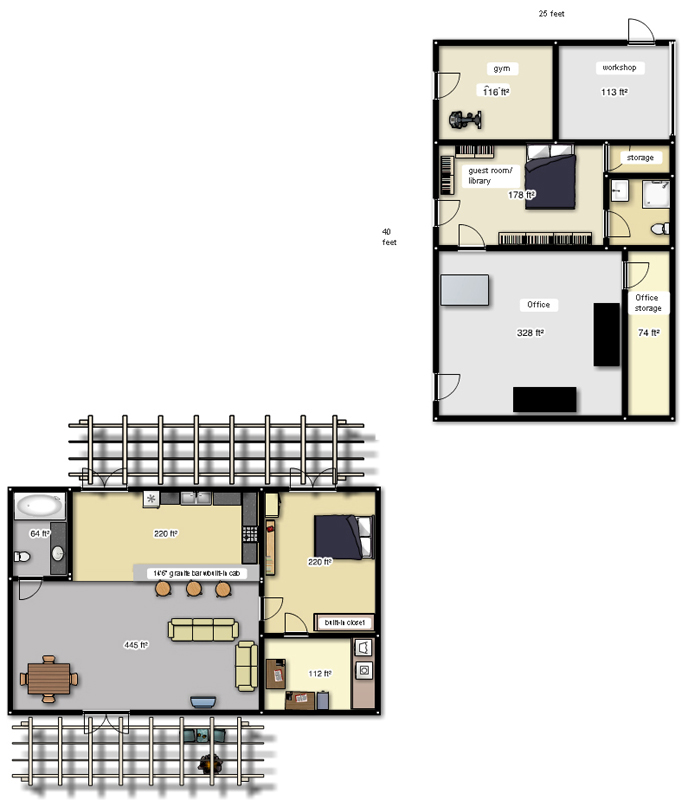
(Click twice to magnify.)
I’m working hard on the math for off-grid solar power right now. The system consists of several big pieces, solar panels, batteries, a generator, and a control piece that manages charging the batteries and converting battery power (DC) to AC. It also provides DC for the few things it makes sense to run on DC.
The first thing you need to do is figure out how much electricity you need in watt-hours per day. This is a lot of work. The refrigerator is the biggest consumer as well as the easiest to figurel it’s on all the time. Contrast that with a microwave. Let’s see, we have a 1200 watt microwave we use about five minutes a day or a garbage disposal.
For solar panels, it seems you figure on five six hours (I checked a chart for our area) of sunlight per day. You multiply that times the number of watts your solar panels can produce and that’s how much power you can generate.
For batteries, you multiply your daily watt-hour needs by three to give you a three day supply of power. You then multiply that number by two because you don’t want to discharge the batteries below fifty percent. (Routinely discharging the batteries below fifty percent shortens their life.)
We are going to have a generator which means that something odd like ten days of rain is not going to leave us in the dark. It also lessens the tendency to overbuild the solar power.
The big power draws:
You might wonder what a pressure pump is. Our water tower is not nearly tall enough to create the water pressure you need to shower or run things like tankless water heaters. When getting information on how much power the pressure pump needs, I was told to first to figure out how much water we will use a day.
One piece of solar power that is already done is the water supply. It’s a perfect little functioning system. It has its own solar panels (no batteries) that run the pump when there’s sun. It pumps the water about twenty-five feet up and into the water tank (1250 gallon). My rough estimate is that the tank holds about at least weeks worth of water and could be completely refilled with one good day of sun.
So our new house will be off the grid. To clarify, that means we will be on all solar. We will, however, have regular phones and even DSL. (When we found out this was possible, we regarded it as a sign from the heavens that this was meant to be. Most places in Portal/Rodeo do not have DSL.)
We have talked to a few people who have solar and even looked at the set up. It doesn’t look bad at all. We did get costs on running power, but it’s fairly expensive ($16,000/mile plus) and really doesn’t seem necessary. And as one future neighbor pointed out, not running power is likely to keep future development out.
In telling people about our new adventure, it’s been interesting to gauge reactions. One thing I didn’t anticipate is that saying we would be “off the grid” would cause people (even those who know us) to question our sanity. In fact, after I told a few people, I stopped telling others. Or I just said we’ll be solar. That seemed less troubling to folks.
For 20 years or so, I’ve had the idea of moving somewhere completely different, remote, isolated, beautiful. At various times, this has taken different forms: a move to a desert island, a foreign country, a big farm in the country.
I could never find anyone who was willing to — let alone wanted to — do this with me though.
Then I met Brad. He always said he thought something like this sounded fun. Then a couple years ago when we began working together and had more professional flexibility, we began making plans.
So for a long time, we looked for a place to go make a new home. Our basic requirements were to find someplace 1) warm (preferably no snow), 2) remote (sparse population), 3) within 2 hours of an airport, and 4) inexpensive enough that we wouldn’t have to work constantly (especially looking at someday retirement).
Those requirements led us to the southwest. As much as we love California, it is too expensive and too crowded. We narrowed it down to Utah, Nevada, Arizona, and New Mexico. We really like Utah, but ultimately decided it wasn’t for us. (We got fairly close to Moab, but after subscribing to their local newspaper, decided there are too many development issues there. Subscribing to a local newspaper is a great way to find out about things you’d never know in a few weeks’ visits.) We liked New Mexico, but the elevation in much of the state means snow. Nevada — pretty, but I can’t stand the slot machines in every corner store.
We kept coming back to Arizona. It met all of our “checklist” items, but we visited city after city and just couldn’t find the place that “felt” right. We heard great things about the Tucson area, but after 3 or 4 trips never found a place we liked. We tried Bisbee; that wasn’t it. (The ginormous mining pit on the edge of town did not make a good first impression.) We kept looking and made trip after trip.
Along with all the trips, we also scoured the Internet. We looked for places selling lots with a lot of acreage. Then we found Portal-Rodeo. There were an amazing number of 40 acre lots for sale there, and the prices were amazingly cheap (and not even just by California standards). So we decided to go look.
The first time we were there, we loved it. The second time we were there, we found KB Ranch. The third time we go, in a couple weeks, we’ll stand on the land that will be our new home.
Welcome to Karen and Brad’s new blog.
Here, we will be writing about our new adventure: KB Ranch, a 40-acre piece of land on the border of New Mexico and Arizona.
We expect an interesting journey as we transition our lives from the busy environs of coastal Los Angeles to the open spaces of quiet range land. We look forward to the journey and to sharing stories about it here.