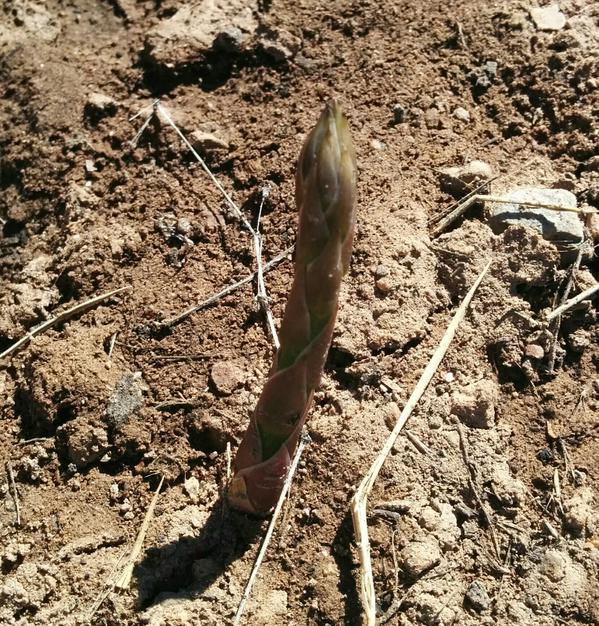
Last Thursday, the year’s first asparagus came up, and this post is to document that.
It won’t be long before strawberries and artichokes are here. And then everything else. Yay for spring!
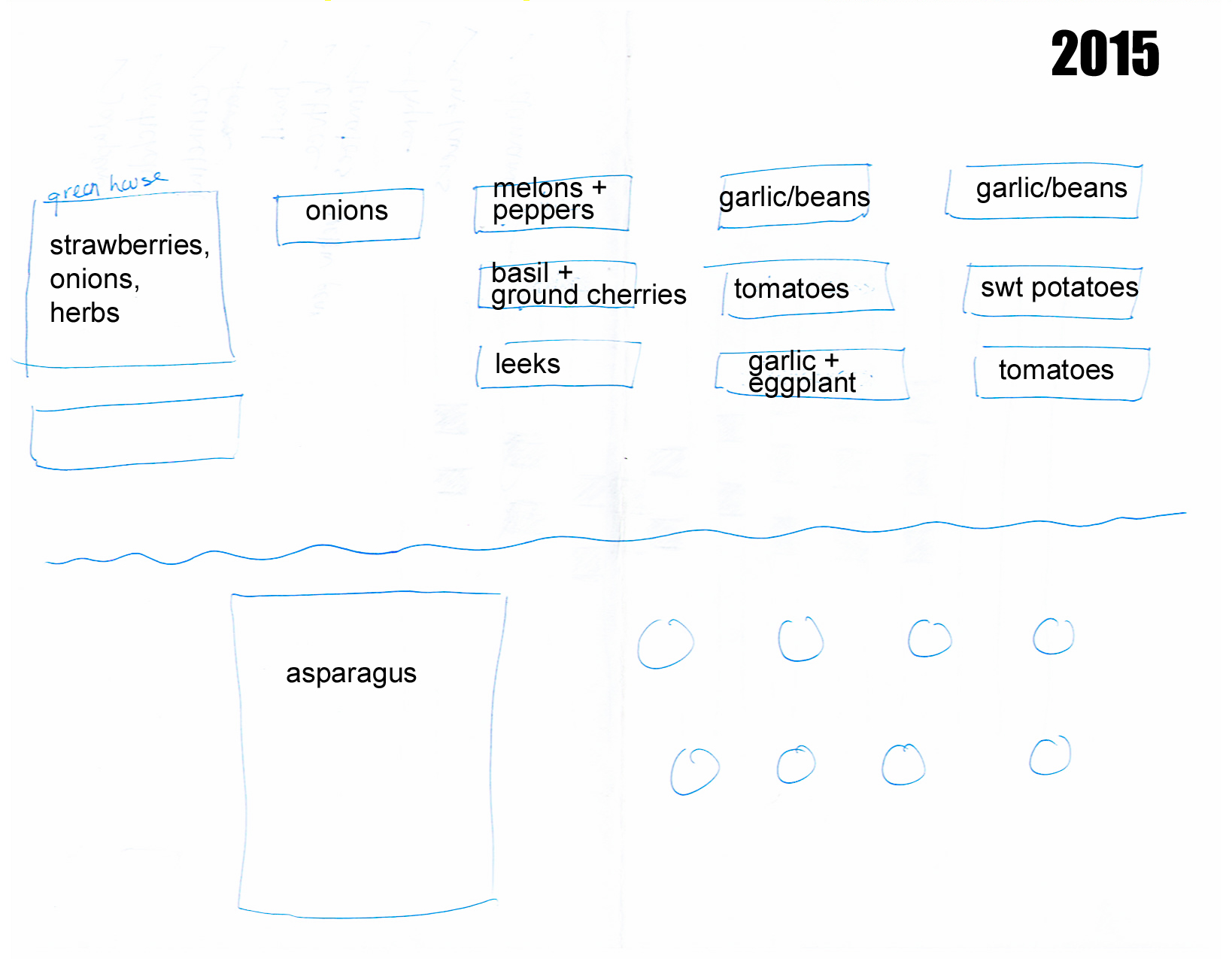
It’s finally starting to warm up here, which has prompted me to get serious about planning this year’s garden. Here’s the preliminary plan:
Not dramatically different from what we’ve grown in the past with a few exceptions. Peppers are new. (I’ve tried them in the past with no luck.) Same with eggplant. The leeks are new, but are already in the ground. (I got some from a neighbor.) Ground cherries are also a new addition. If you’re not familiar with them, they are are nightshades, and the fruit resembles cherry tomatoes but they grow in a husk likeĀ tomatillos. The ones I got are the poba, and they taste like pineapple.
I’m mostly planning to grow lettuce and greens in our cold frames, but I may sneak some into some other beds as well. Same with radishes.
We’re looking forward to spring asparagus soon!
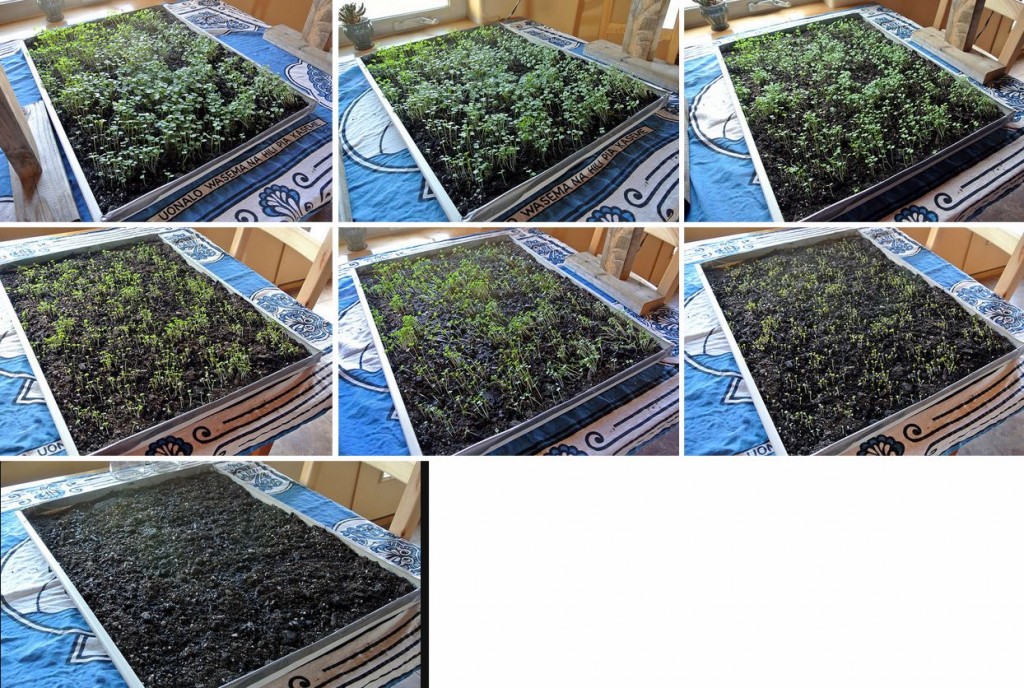
I’m attempting to grow microgreens. (This idea came after a very lovely bed of lettuce outside got munched down. I’ve replanted, but can’t do without greens for 6 weeks. The weather here is well below freezing at night, and things outside grow slowly in the cold.) Microgreens are supposed to grow as fast as two weeks.) We visited a farm that grew large amounts of this, and I’ve had it in the back of my mind ever since.
We adapted an old piece of roofing to make a tray to grow these in. I’m starting with varieties that are supposed to be easy and fast-growing like arugula, cress, and broccoli. The seeds sprouted within two days.
Stay tuned for more on how this goes.
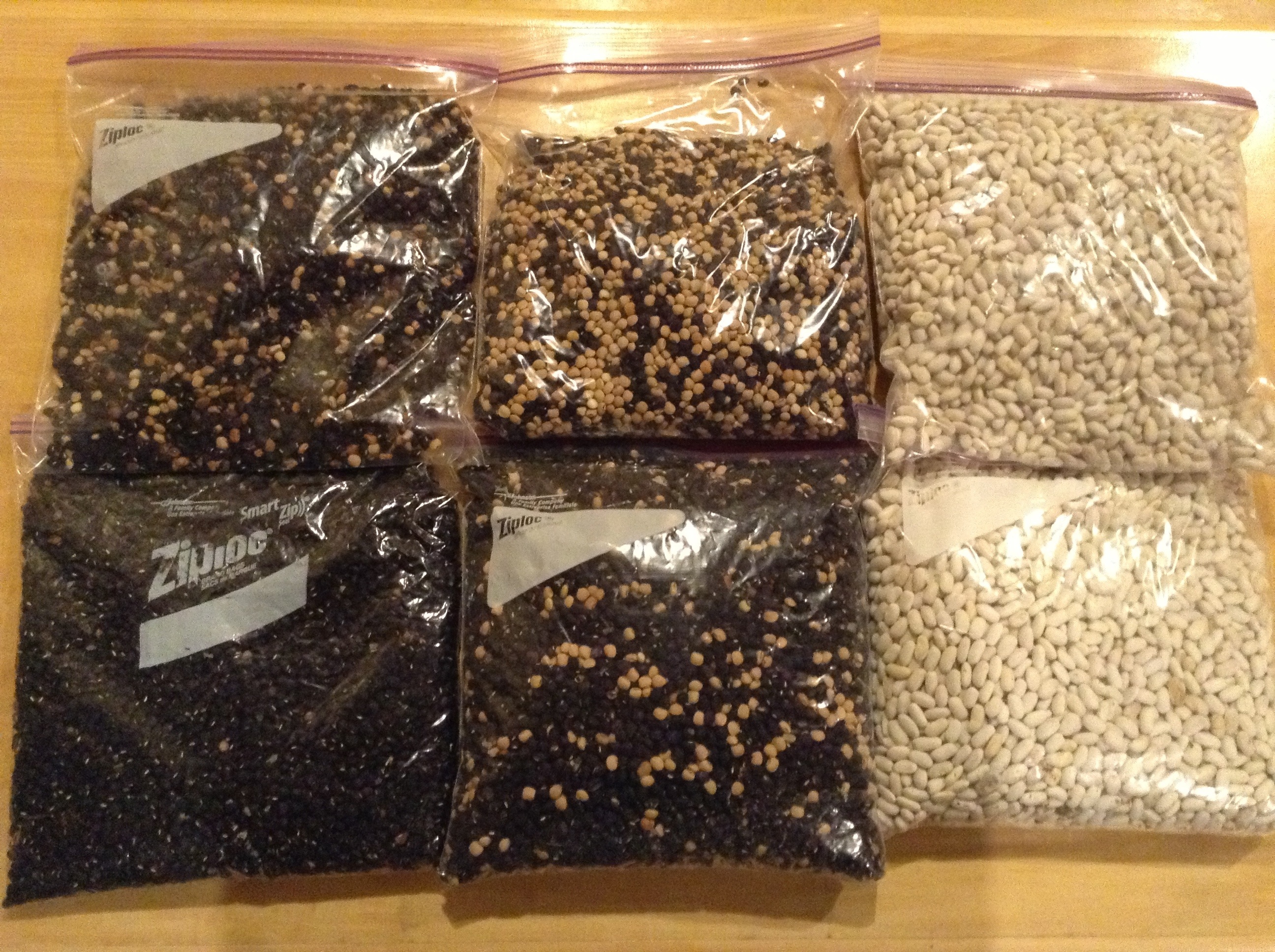
This week I finally finished shelling all the dry beans from the garden this year.
The two bags on the right are white cannelini beans, my favorites. The others are Bisbee black cow peas. As you can see, a few beds of these seem to be going back to regular light brown cow peas. (All of these beans were seed saved and are on their 2nd or 3rd year.)
These are big gallon ziploc bags. I’m not sure we can eat this much beans in one year, but one of their attributes is that they last.
Two days ago a big storm system swept through the southwest. We were supposed to get a couple inches of snow. We got a little rain and barely a dusting of snow. Not very exciting.
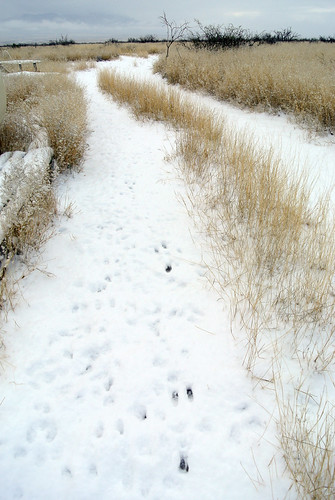
Yesterday, there was no precipitation forecast. Then I woke up to this.
Currently, we have about 4 inches of snow. This is the most we’ve had in the 6 years we’ve lived here. And it’s still snowing! (The weather forecasters seem to have no clue. The forecast is getting updated every hour or so for the snow we’ve received so far. This doesn’t exactly seem like a “forecast.”)
One of the interesting things is all the wildlife I saw while I was walking around in the snow this morning. In particular, there were tons of rabbits. We often see a couple, but nothing like this. I’m not sure if they were drawn closer to shelter or if it was just easier to see them against the snow. All the tracks were pretty fascinating too.
It has been very cold this week so I don’t expect this to melt soon. It would be nice to see the sun again though.
Many of you who have visited have enjoyed a drive back into Horseshoe Canyon directly west of our house. It is national forest service land and has many hiking trails and camping spots off the dirt road.
Since Odile though, the road has been closed at the mouth of the canyon (at the old corrals for those who’ve seen it).
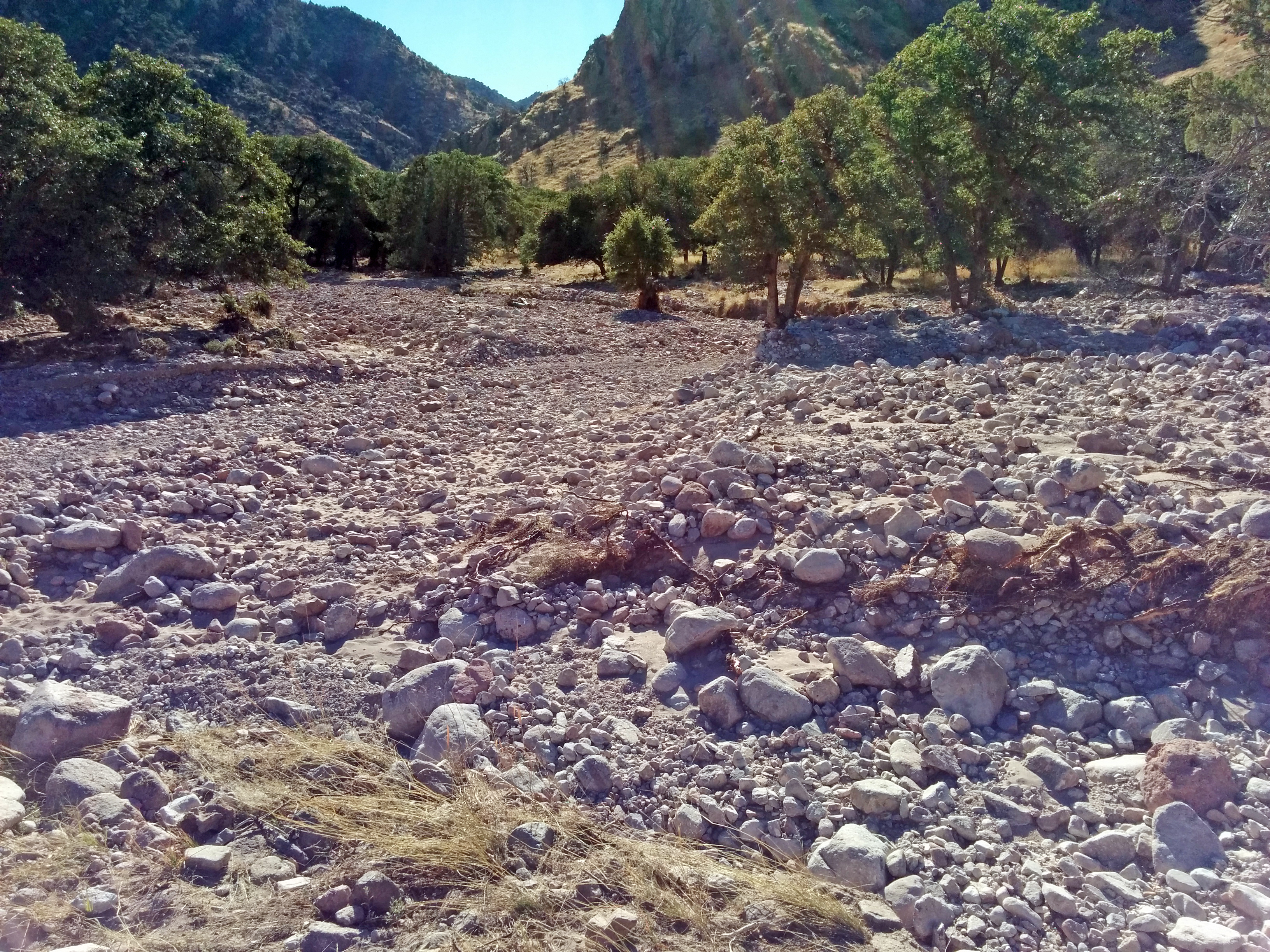
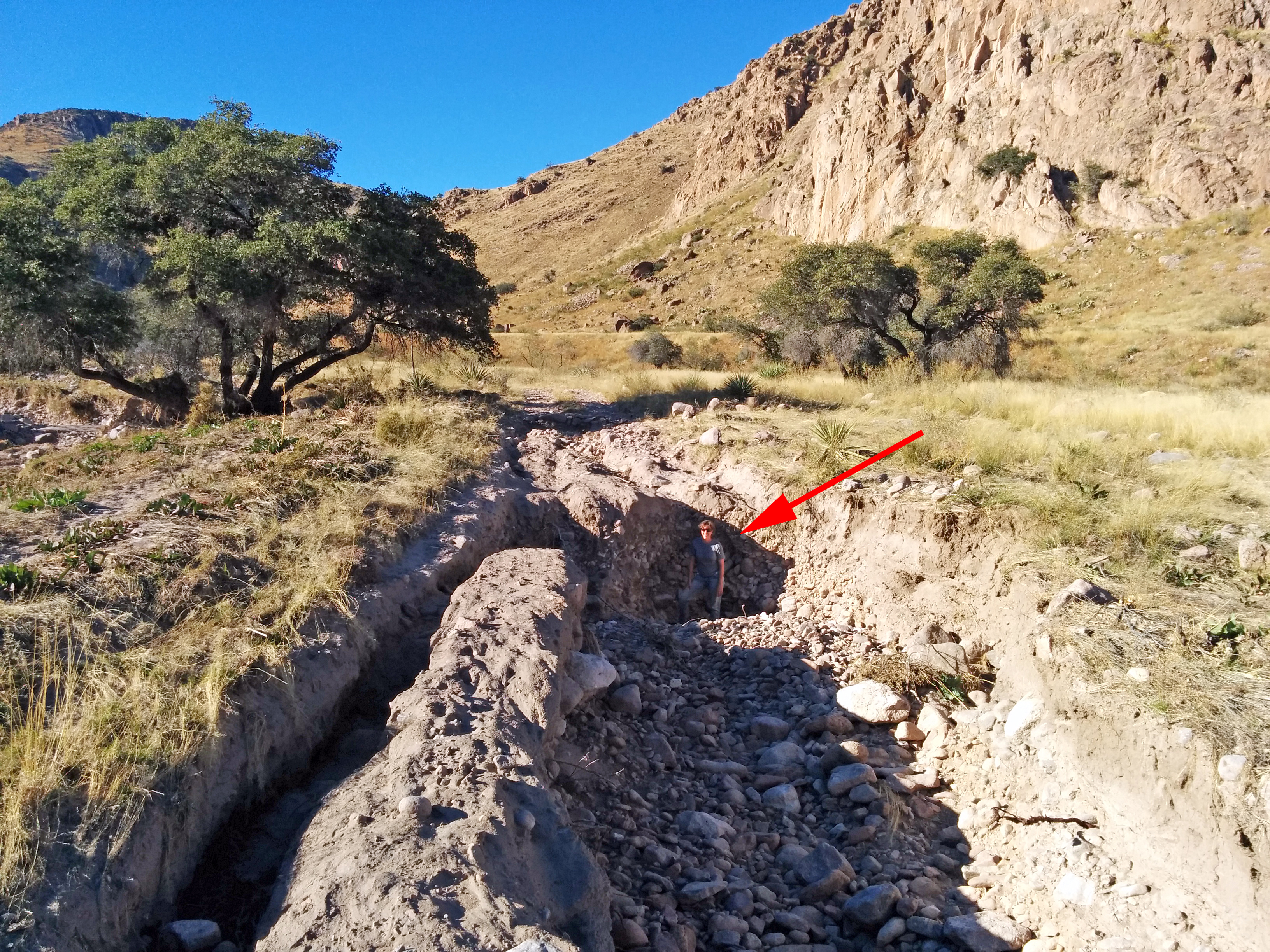
Last weekend, we decided to take a hike back to see what the damage was like. In a word, it was unbelievable.
Much of the valley floor has been washed away. There are stretches where you can see that the raging water must have been more than a hundred feet wide, and there is nothing left but rock.
The road is completely gone in many places, and in some there are holes that go ten feet below what used to be the road level. While navigable by foot or on horseback, it would be impossible now for any motorized vehicle to get through.
It is hard to imagine what would need to be done to repair or more likely build a new road. And with all the other more used canyons here, like Rucker, Price, and Cave Creek, this would be at the end of a long list.
So for the foreseeable future, if you want to see the interior of Horseshoe Canyon, bring your hiking boots.
The leaves are starting to turn in Cave Creek.