A chance of rain

Written by karen on June 29th, 2011

It’s hard to believe that it’s almost the beginning of July, but here we are. I’ve been traveling a lot this month, which has meant not a lot of big work on the house, but I’m now home for a long stretch. With some big work projects completed, we are now full steam ahead on the house.

After two months, the fires are now finally safely far from us, though our thoughts are with those who are now affected by them. The firefighters’ camp has moved north. It was strange to see them all cleared out in just 24 hours.

Just as the fire updates stopped coming, we began getting warnings of impending flooding. It’s a littleĀ  hard to think about that since we haven’t had rain since last year, but the big monsoons are due any day now. In fact, I am writing this on a plane going back home and heard from Brad yesterday that we got our first sprinkle of rain. (I was in Philadelphia, and it rained there, as it often does. I had an overwhelming urge to run into the middle of the street and dance in the rain.)

The weather has been extraordinarily hot at home, hotter than it ever got last year. It has been between 105 and 110, and even the evenings have not been as pleasantly cool as they usually are.

The garden is thriving in the heat, except for the eggplants. The more I read about them, the more I think they don’t thrive in any conditions we are likely to have; they seem to be very sensitive to heat, cold, wind, and other variations. Ours are doing ok, but not exactly thriving. The tomatoes, on the other hand, are going crazy. At last count, there were over 50 fruits. I think we will be canning sauce and salsa soon. Brad has put in another bed for more garlic, and I look forward to having an even bigger and better garden every year.

The deer around the house each evening are getting more numerous and less shy, especially as it is so hot and dry, and we have water for them. Brad has won the latest round of battles with the bees in the front tree, but the war remains in question. (Any suggestions on getting bees out of a tree are welcome.) We have not seen even one rattlesnake this year. In fact, my only snake sighting was a very small garter snake that was nearly on top of my shoe one morning we went walking. Both the snake and I were quite startled by each other.

When the first rain comes, we will anxiously scout about for all the wildlife that seems to appear at that prompting. velvet mites, our lovely turtles, frogs, and whatever else might spring from the ground. It’s an exciting time that first rain!
 

Garden update

Written by karen on June 12th, 2011

Things are growing like crazy in this heat.

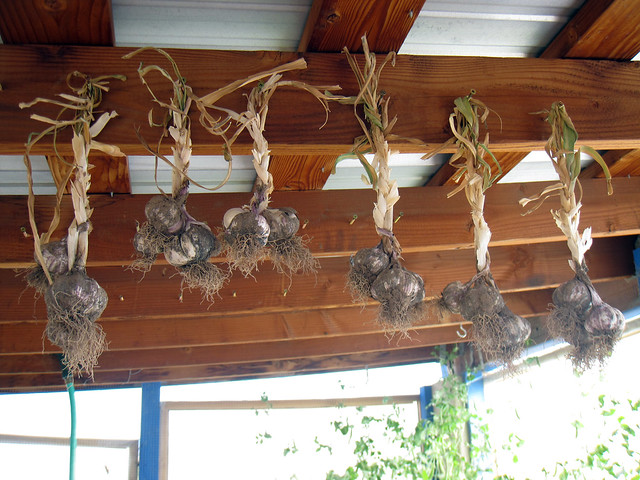
Brad harvested his garlic. (This is only about a third of it.)

We’ve been eating lots of peas.

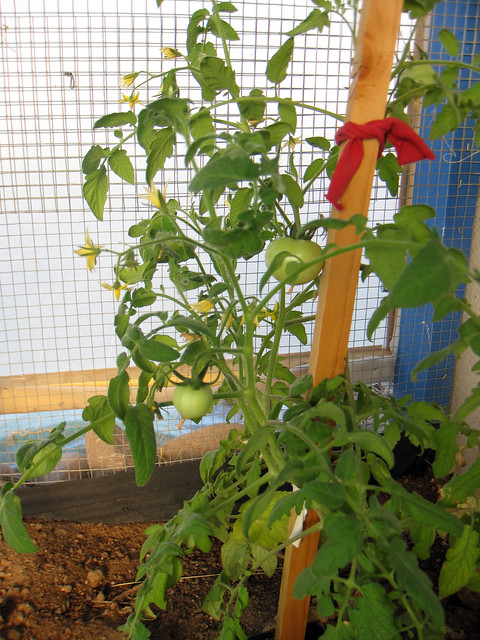
The tomato plants have about 20 small green tomatoes growing.

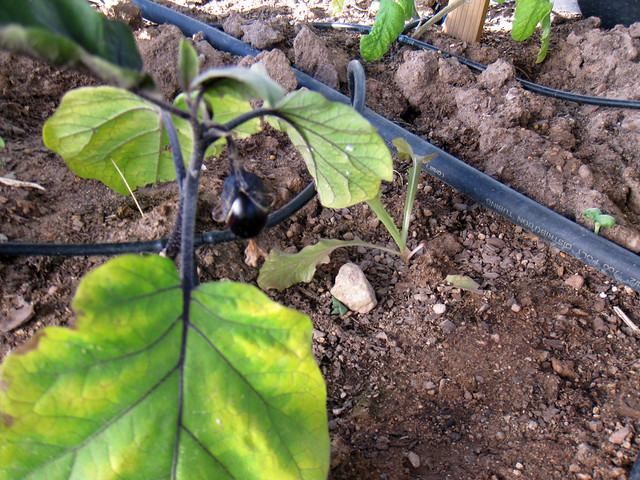
And there are 5 or so little eggplants.

We’ve planted beans and cucumbers, which are growing great, and melons and winter squash, which aren’t up yet. We’re still cutting lettuce and wondering if it will ever stop growing or get bitter.


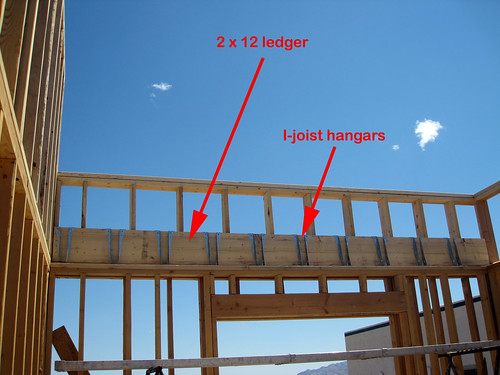
My little pony wall

Written by karen on June 7th, 2011


Big milestone

Written by karen on June 3rd, 2011

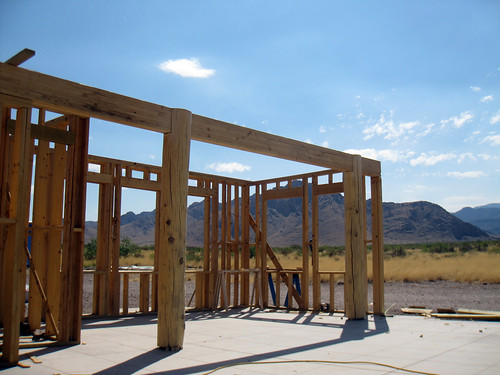
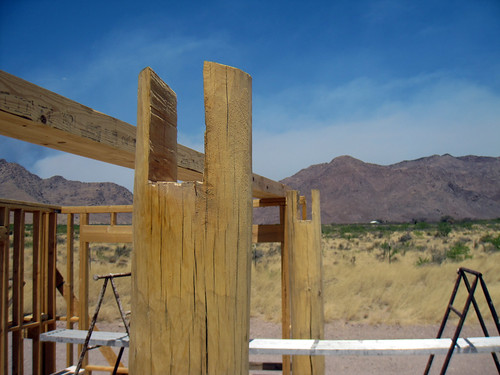
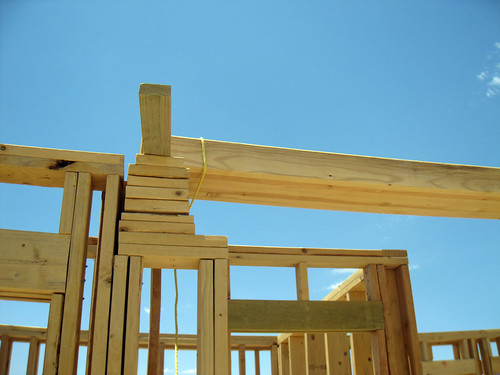
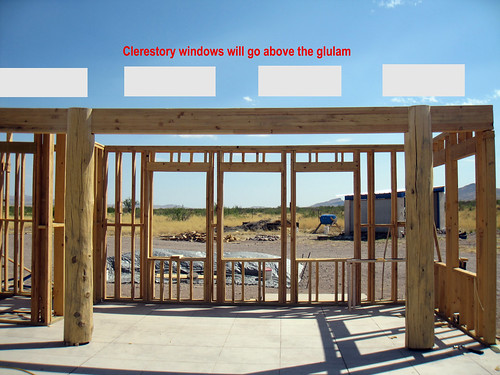
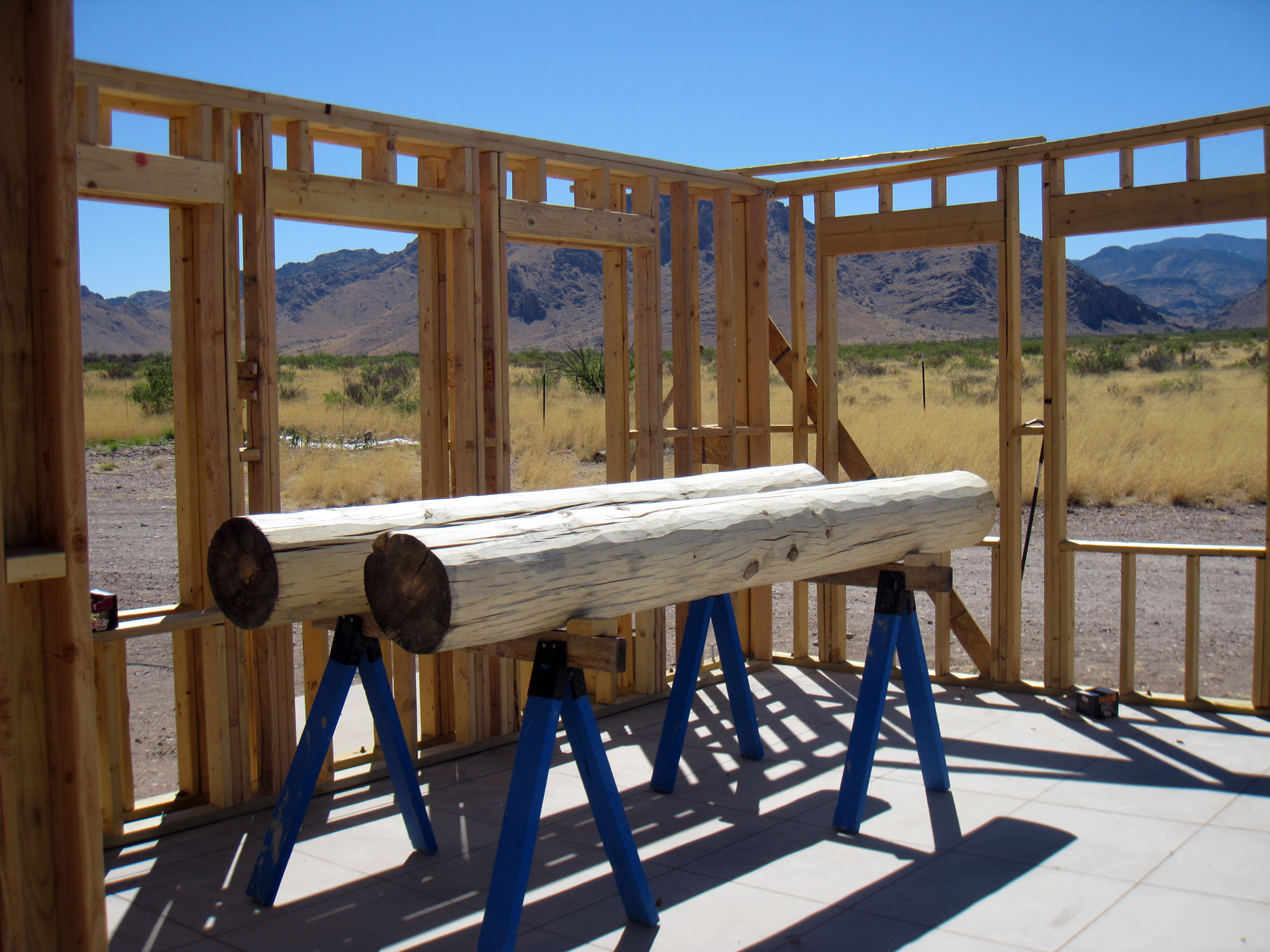
We have spent the better part of a week working on this, and the vertical vigas and glulam are now in place. (A glulam, for the uninitiated, is a long structural timber made of several layers of wood that are laminated together – the crossbeam in this photo. Vigas are wood beams made of a single piece of wood-the round vertical beams in this photo.)

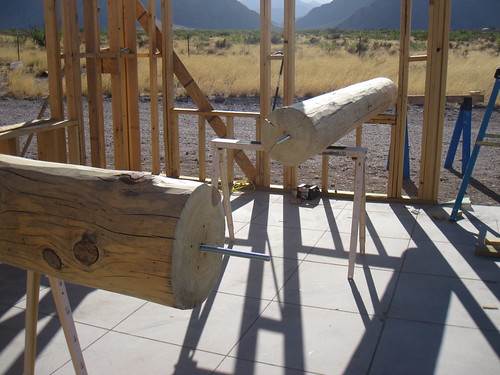
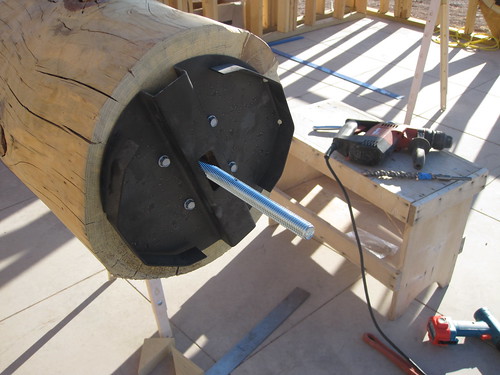
The hardest part of all of this was that the vigas and the glulam are all extremely heavy. After we moved the vigas, Brad drilled holes in the bottom of each one and epoxied in a long bolt.

A metal plate that was part of the mounting kit went on the bottom.

We then drilled holes in the slab into which the other end of the bolt would be epoxied.

It was difficult to get the viga lined up with the hole, and we wanted to do a “trial run” first (sans epoxy) to make sure the placement was right. Once you epoxy them in, that’s where they’ll be forever.

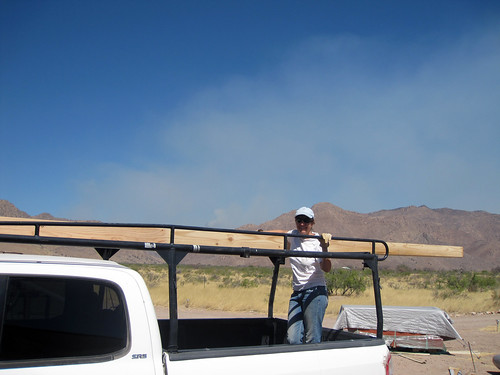
The next step was moving the glulam up to the roof. It was heavier than the vigas, so we used the truck to move it and got a lot of exercise hoisting it up.

Then we cut out notches where the glulam would sit in the viga. We used a chainsaw for this, another new experience. I thought I’d really like chainsawing, but as it turned out, we both hated it.

The final work was done with a chisel and grinder. The grinder was really useful for this.

On one end, we built a little stack of 2x6s for the end of the glulam to sit on while we seated the other end. (Note the rope. It was very windy the whole time we were doing this, making it all the more difficult. You wouldn’t think a gust of wind could blow over a piece of wood that weighs several hundred pounds, but it can and did.)

After trying to seat the glulam in place, it didn’t quite fit. Not only does the notch have to be the right size, but how square it is (how parallel all the parts are down the line) makes a big difference. So we went through this a few times…trying it, grinding, and trying it again.

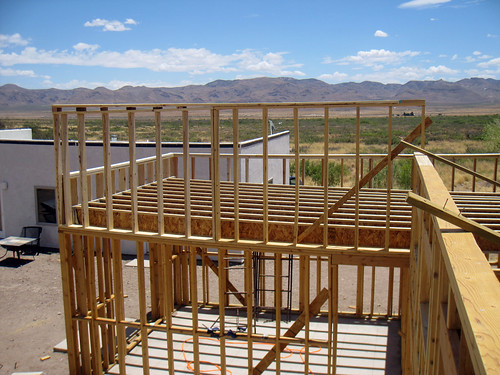
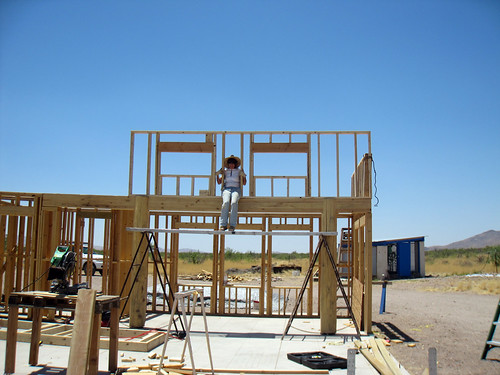
Eventually, the clerestory windows will sit above the glulam, and the room in front of it will have a high ceiling with vigas in the ceiling. Building the pony wall for those windows is the next task.


Quick update

Written by karen on May 18th, 2011

The fires are still burning. We’re up to almost 800 firefighters and 30,000 acres, but it is 25% contained which is good news. From our house, the fire doesn’t look as bad as it did, though we can still see flames at night. The research station has been evacuated, but no structures anywhere have burned (with the exception of one trailer that was not wildfire related). It is very windy today with the same predicted for tomorrow.

As for my garden, the volunteer cucumbers bloomed, revealing the fact that they are not cucumbers at all. They seem to be some kind of squash, probably butternut from seeds in the compost. I transplanted them to outside the greenhouse. If they don’t get obliterated by the wind, we’ll see what they turn into.


The fire and our garden

Written by karen on May 12th, 2011

The fire has now burned over 13,000 acres and more than 560 firefighters are here. This fire burned more in 24 hours than the fire last year did in four weeks, due mostly to high winds. Strangely, even given that, we are feeling more secure personally. No homes have been burned, and we have heard that the firefighters have a “high degree” of confidence that they can prevent the fire from getting out onto the flats where we are. Still, seeing the smoke all day and the incredible flames every night is depressing. And we have not yet unpacked our “evacuation box” (pictures, records, a few other things we wouldn’t want to lose). I’m sure we’ll be fine though, so don’t worry!

On a brighter front, the garden is fabulous. We have moved about 14 of the 20 tomato plants outside. We saw the first actual pea-sized tomato today. The eggplants are thriving, and the peas are taller than me. We have edamame coming up, and there are so many volunteer cucumbers from last year that I may not even plant any new ones. Brad’s garlic and asparagus are thriving. Good health all around, so far at least.

Lettuce from our garden

Lettuce from our garden

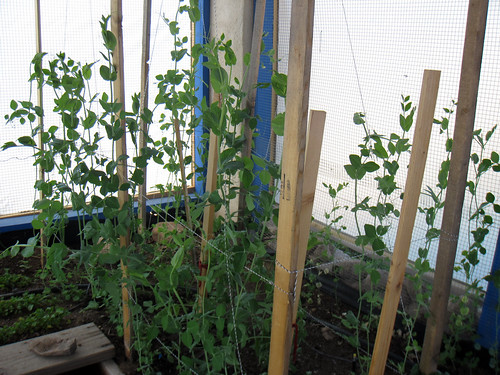
Peas in the garden

Peas in the garden

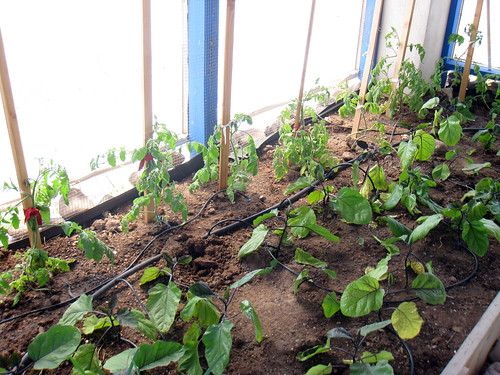
Eggplant in the foreground and tomatoes behind them

Eggplant in the foreground and tomatoes behind them


Update

Written by brad on May 9th, 2011

A wildfire started in Horseshoe Canyon yesterday around noon. The winds have been fierce and from the south. The fire started due west of us and headed north. We seem out of its way for now, but many of our friends and neighbors are in its path. More news as we get it.


Heavy lifting

Written by karen on May 2nd, 2011

After having our first neighborhood party yesterday (which was great fun; we have such good neighbors), we began work on the vigas (wood beams) today. We needed to move the first two, which will be beams that run vertically from floor to ceiling to support the clerestory windows. (The rest of the vigas, which are roughly twice as long, will run along the width of the ceiling in the great room.)

Even though they are smaller, these first two weigh roughly 250 pounds each, so we had to be clever about how to move them.

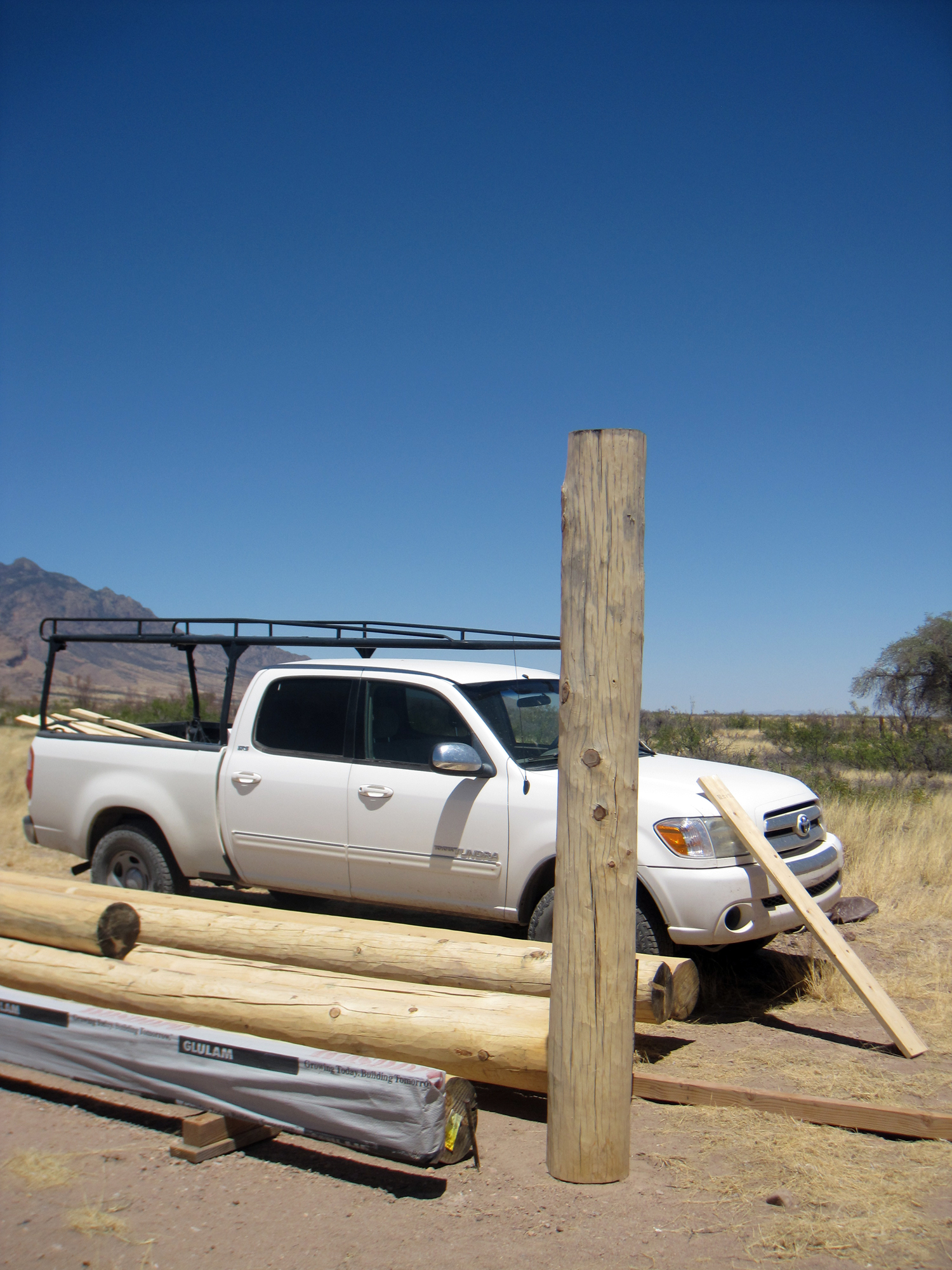
First, we took them off the pile and stood them up, no small task in and of itself.

vigas1

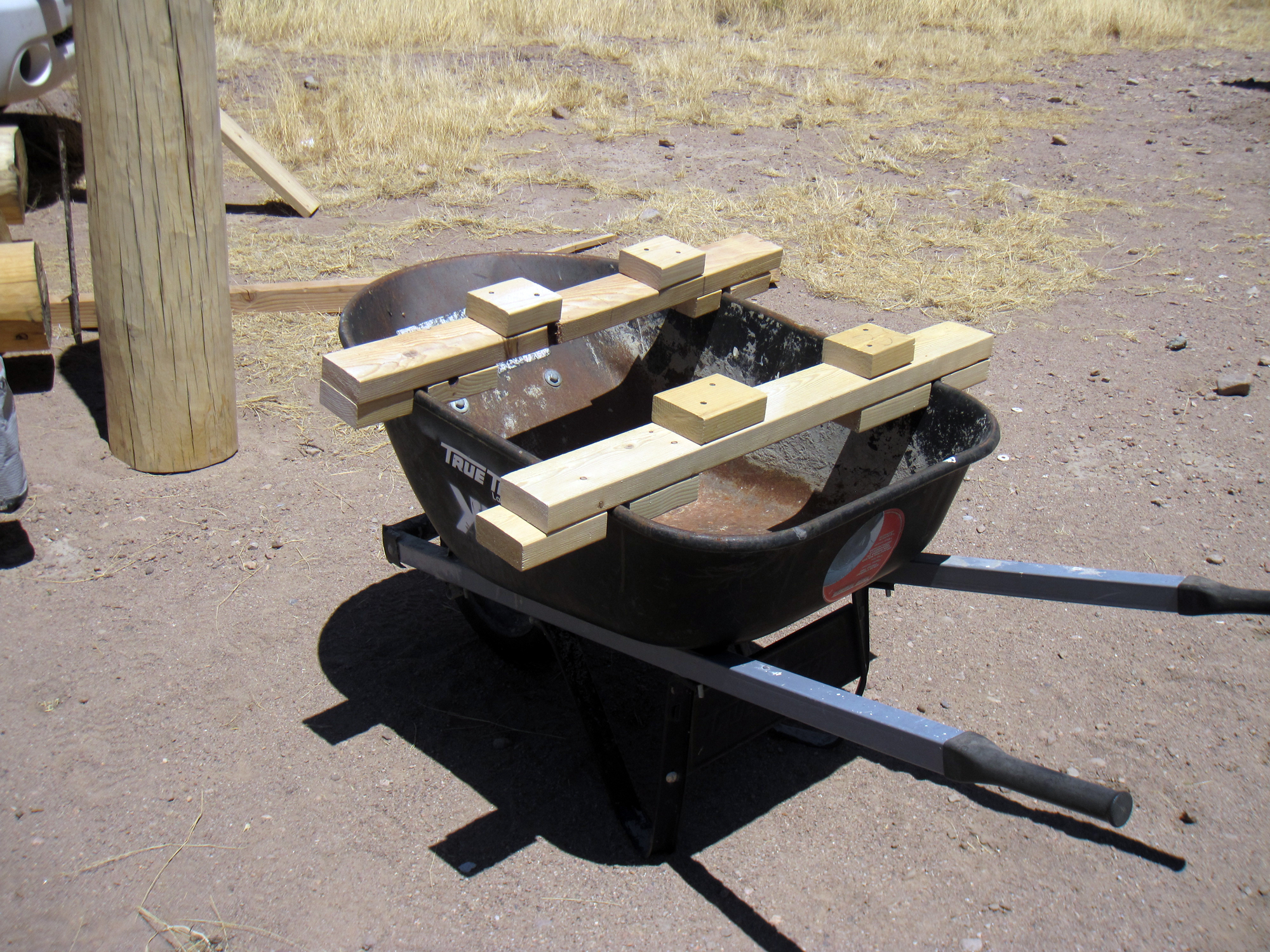
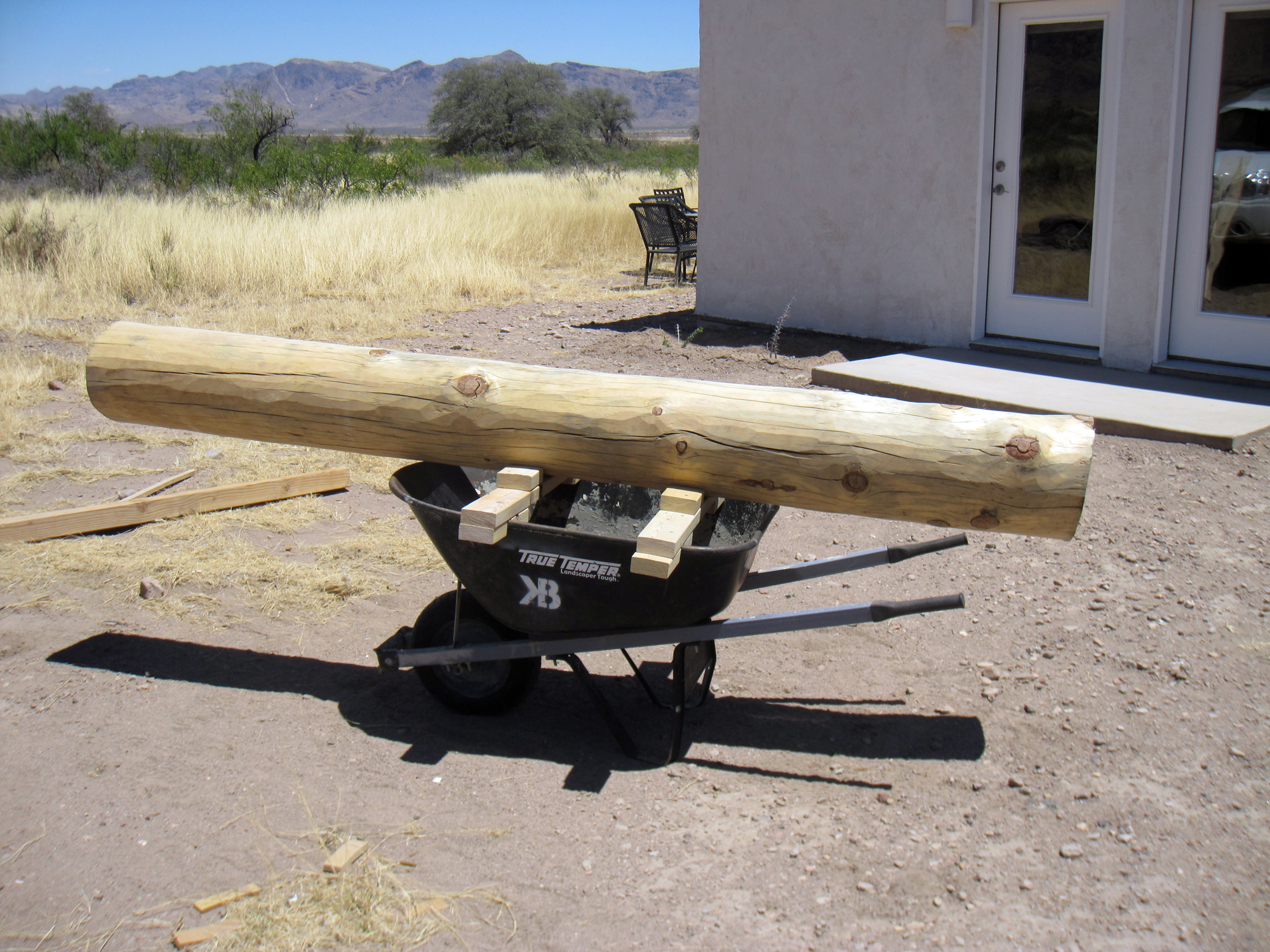
Then we built a contraption to balance the viga on the wheelbarrow.

vigas2

Our poor wheelbarrow!

vigas3

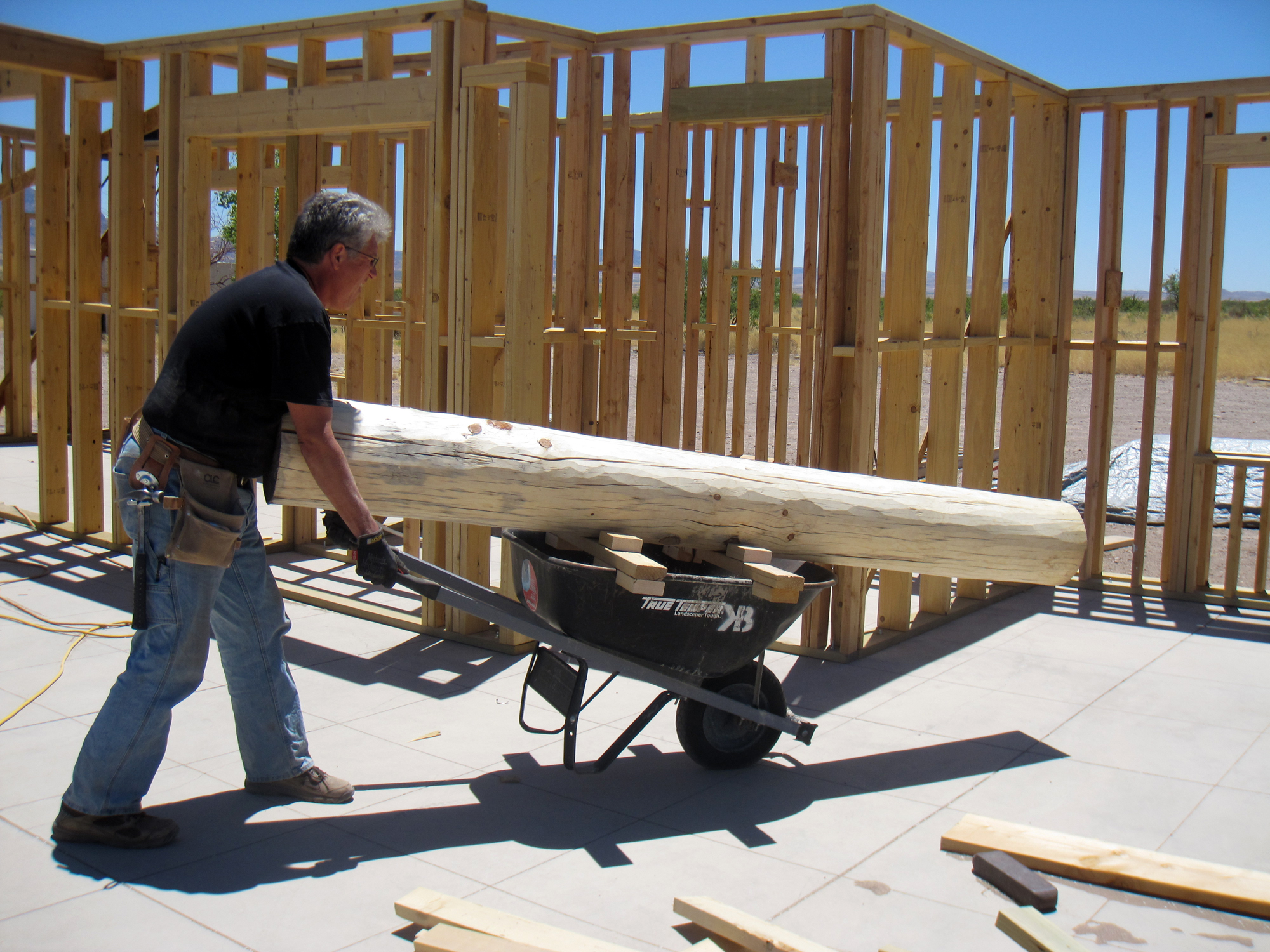
Then on to the slab.

vigas4

vigas5

Obviously, there were parts of this process that remain unphotographed because it took both of our focused attention (and brawn:).

Now, we’re leveling off the bottoms to prepare for mounting them to the slab, which will involve drilling holes and epoxying bolts in.


First blooms

Written by karen on May 2nd, 2011

IMG_1791

IMG_1792


Asparagus and Pomegranates

Written by brad on April 19th, 2011

One of the myriad of interesting neighbors around here gave us enough starters for five nice sized asparagus plants. Yum. His are awesome and I can be sure of that because Karen cooked up a mess (as Craig called it) of it that we got along with the plants to grow our own. One thing I didn’t know about asparagus is that it’s ready to eat pretty early in the year–maybe as early as February. That’s great news. One thing about growing your own food is that there are times when nothing is ready. You have to work at finding things that produce in the off times.

Craig did warn me that these can be a bit of a pest. All the ones he gave me were volunteers growing right where they were not wanted. (Mostly in the middle of his garlic.) We planted ours down near the solar panels which may become the perennials area. We have two pomegranate plants there already.

Asparagus crowns waiting for planting

Asparagus crowns waiting for planting

Asparagus in its new home

Asparagus in its new home

Five new asparagus in their desert home

Five new asparagus in their desert home

A pomegranate tree/bush year one, planted in the fall

A pomegranate tree/bush year one, planted in the fall