
These are in their second year. They were grown from seed last year, put outside in June, 2013, and came back strong after this winter. Today we saw the first actual artichoke. Exciting.
These are in their second year. They were grown from seed last year, put outside in June, 2013, and came back strong after this winter. Today we saw the first actual artichoke. Exciting.
It’s spring here, and that means it’s time to start cleaning out last summer’s beds and preparing them for the next season. There is a municipal compost program in Sierra Vista, and we got a truckload (1 cubic yard; about 1,000 pounds) of compost there last week.
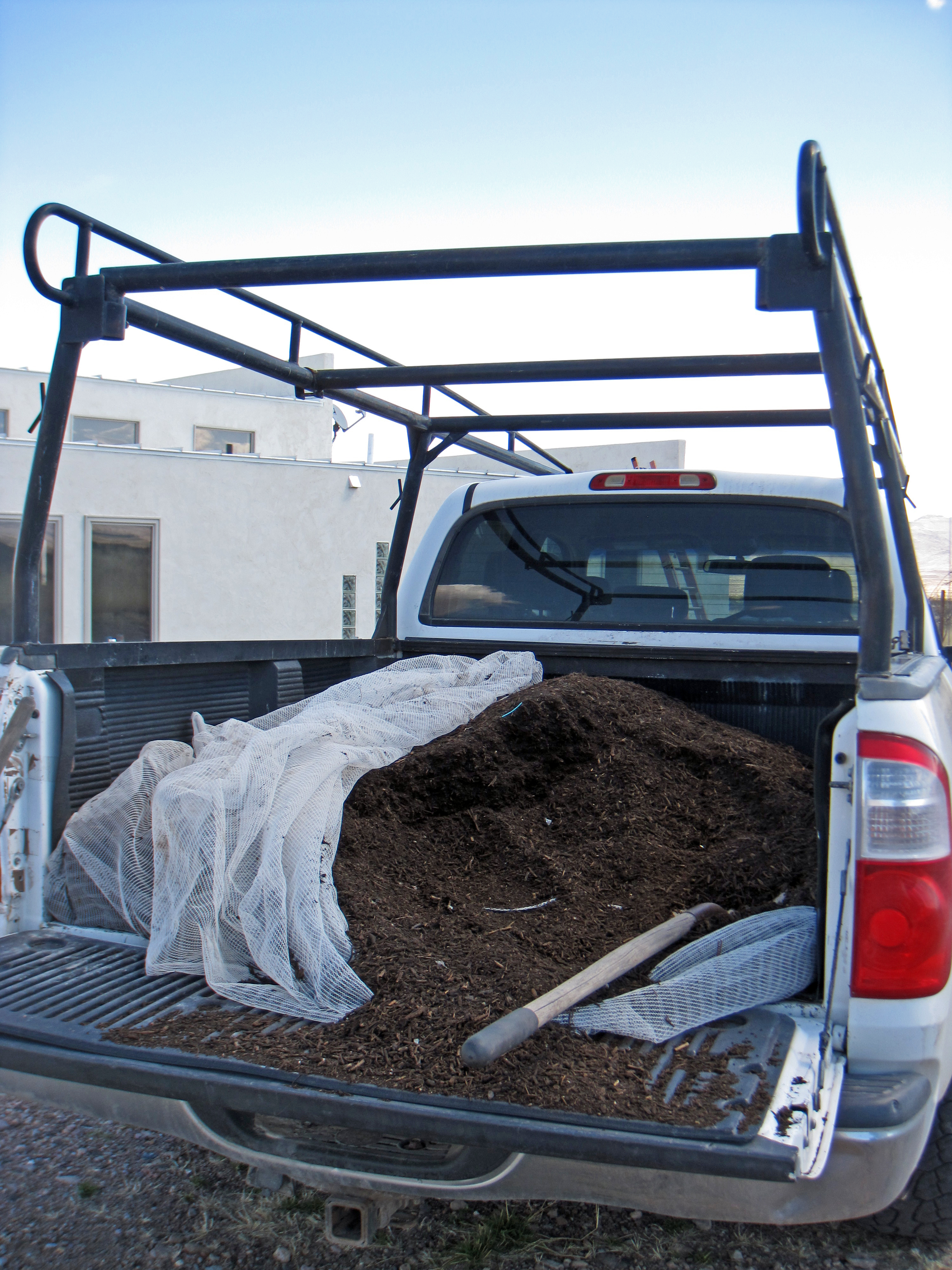
Here is one bed after weeding, composting, and watering.
The spring tat soi (an Asian green, similar to spinach) is looking good, and we’re starting to eat asparagus!

And as usual for the time of year, my office conference table is full of tomato starts.
I made this video as a part of a daily digital storytelling exercise that I sometimes do.
(The assignment was “To begin, take a short video of the area you start your video adventure. Then, take 20 steps in one direction and stop, record another short clip. Repeat this process after taking another 20 steps. After you’ve captured 20 little videos, every 20 steps, you’ll edit them together to create a masterpiece. For a bonus add thematic music and snazzy titles.:)
Two interesting things that I found on the property while doing this that you’ll see in this video were a giant coyote den (large hole in the ground) and some massive tumbleweeds that must have blown in during the last big wind.
I’ve been working on a project to learn how to inlay tile into wood. I’m pretty sure this isn’t the best way to do it, but here’s what I did.
First, I marked off the area where the inlay would go and cut the edges with a utility knife.
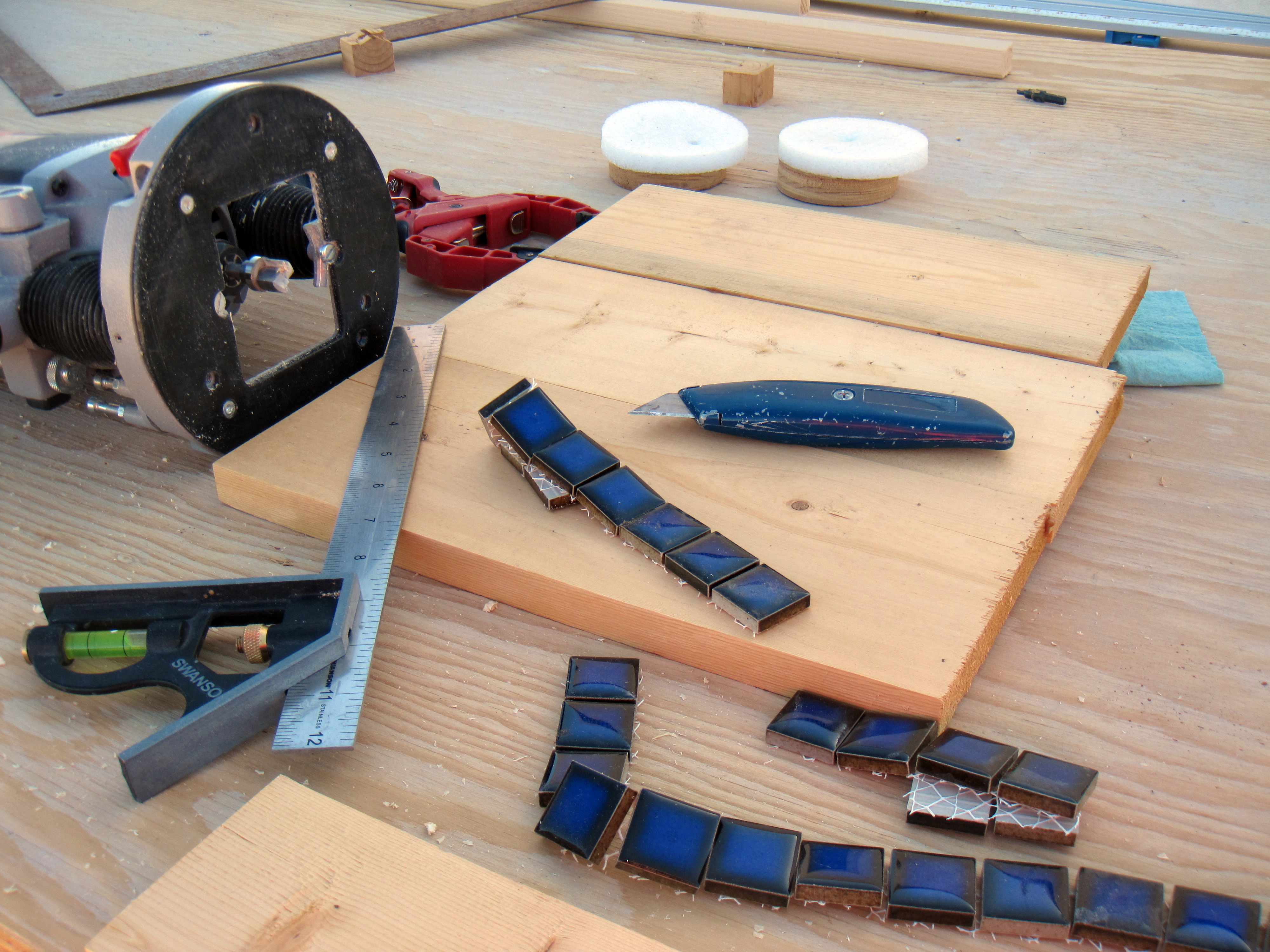
Then I used a router to take out most of the wood in the inlay area (but didn’t go all the way to the edge).
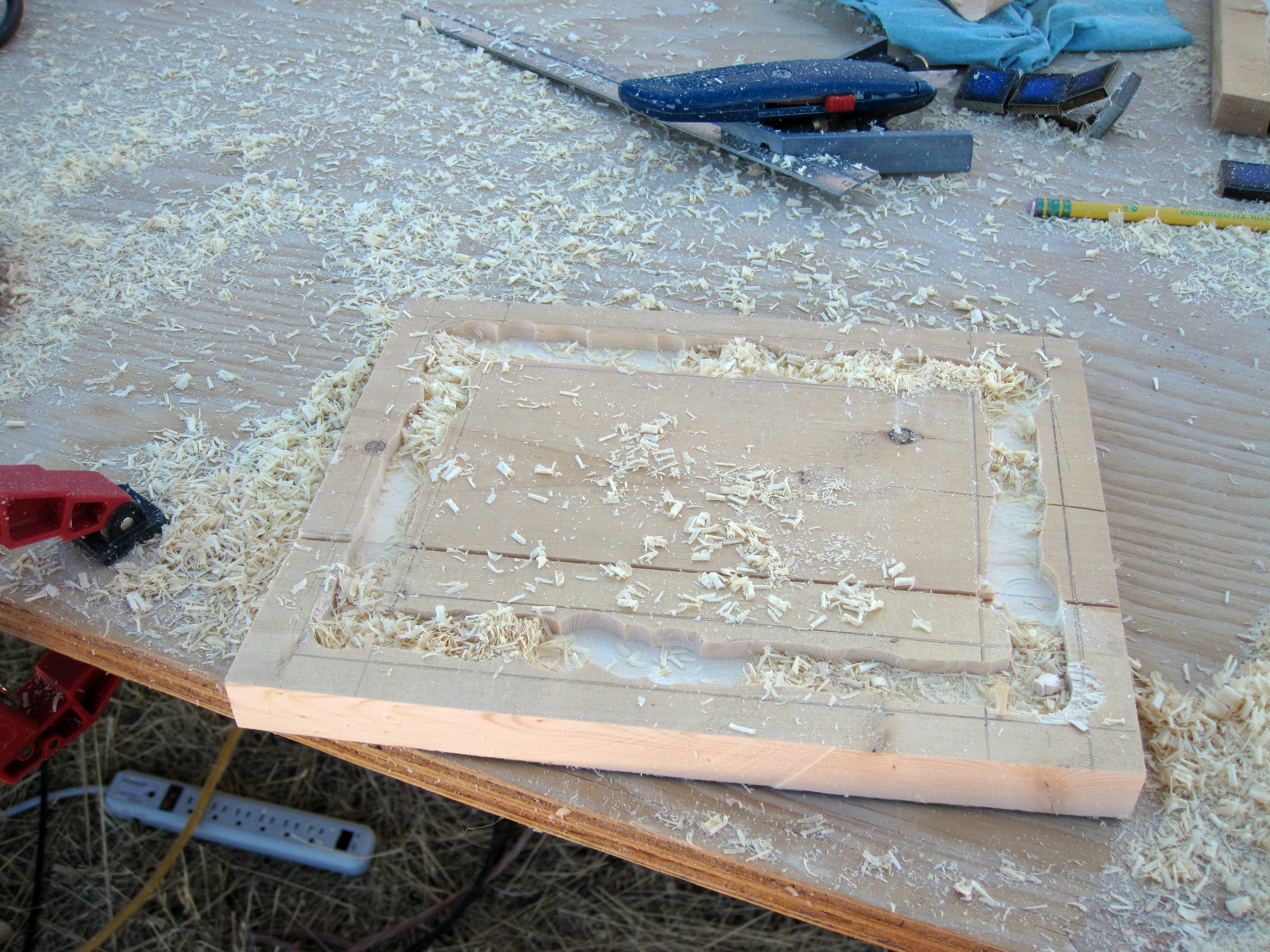
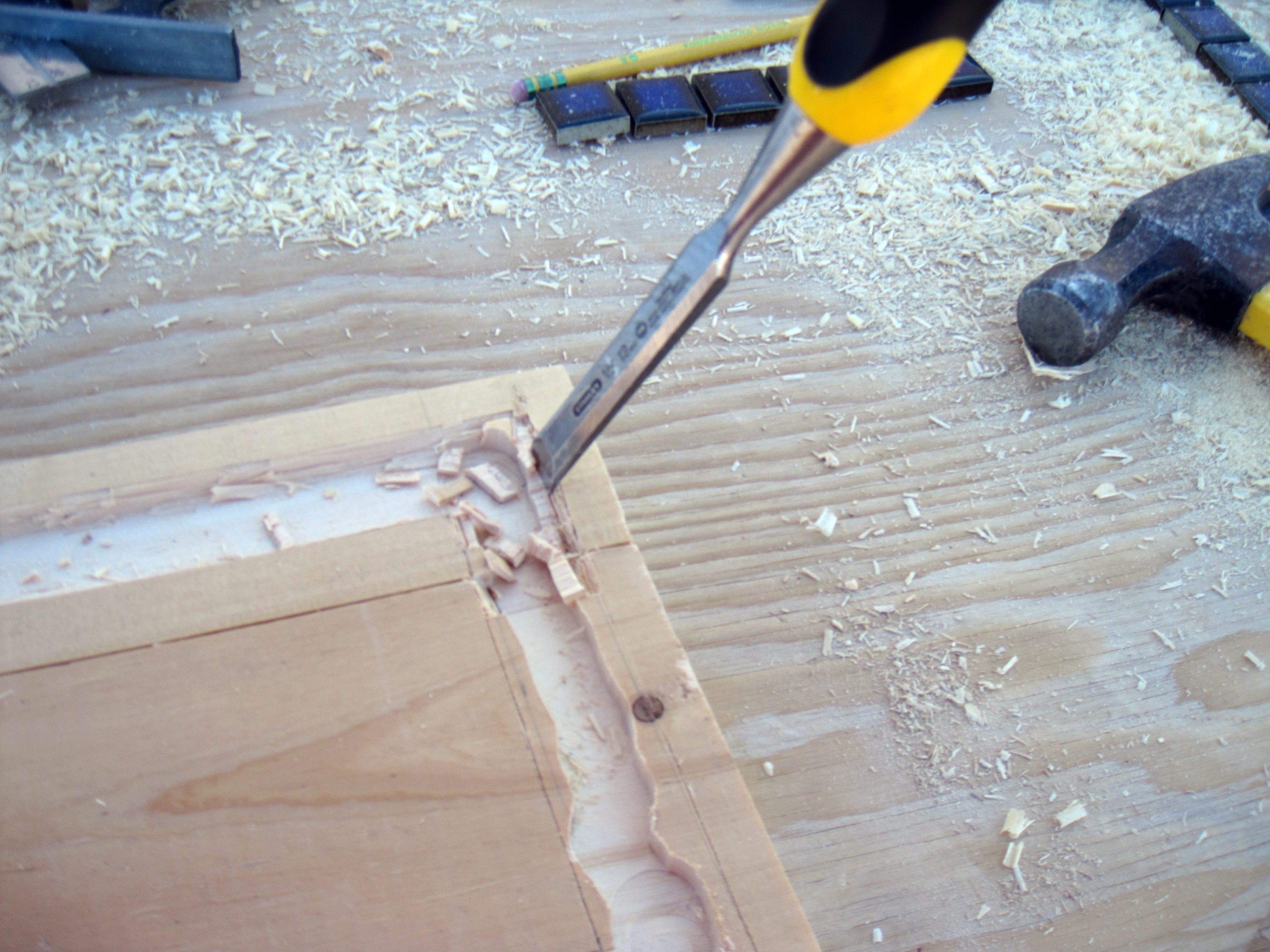
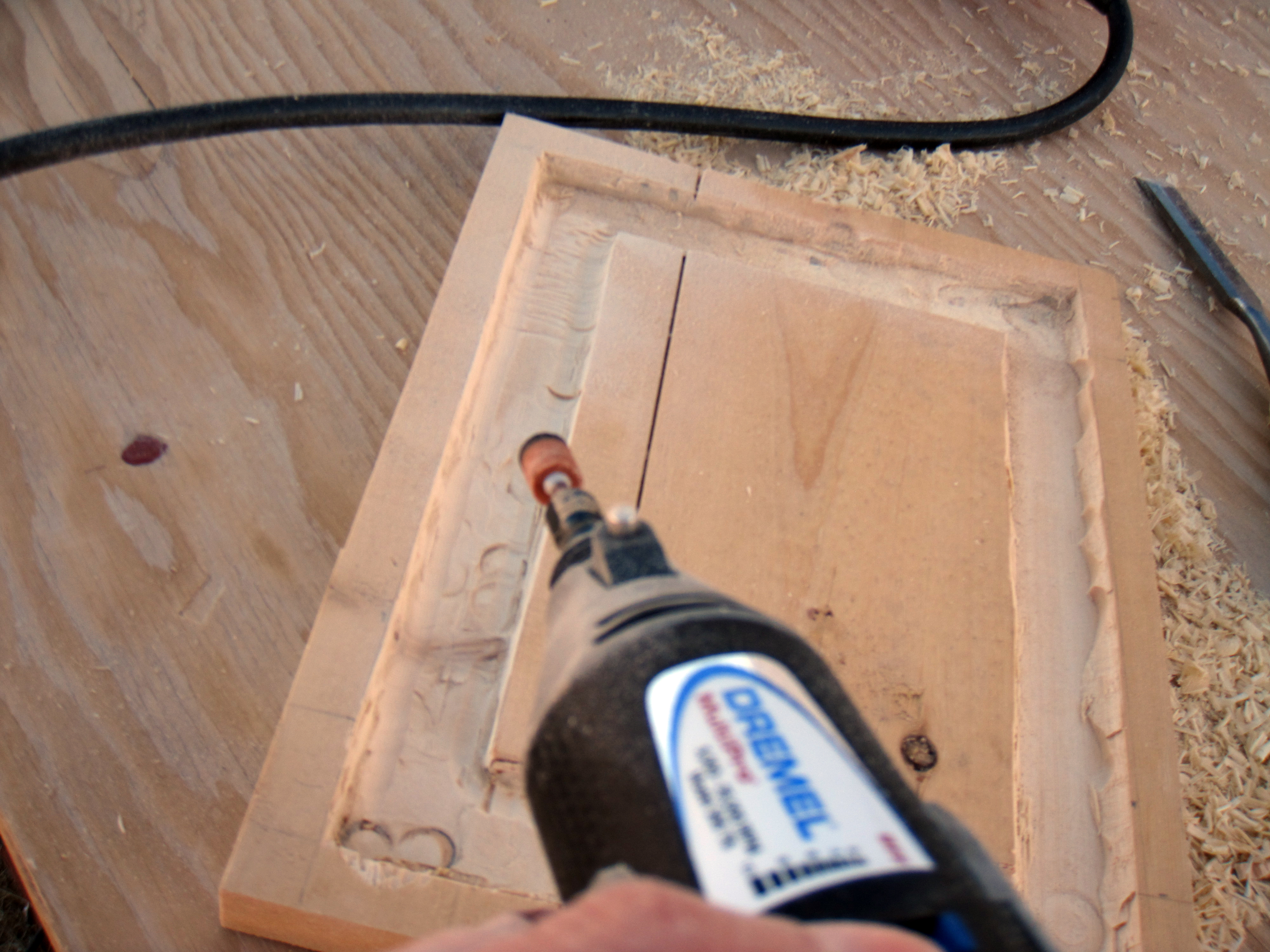
Next I used a chisel to remove the rest of the wood to the edge. This still left a fair amount of rough wood though, so after that I used a Dremel to take out more.
Finally, I sanded it out, stained and varnished. Here’s the final product:
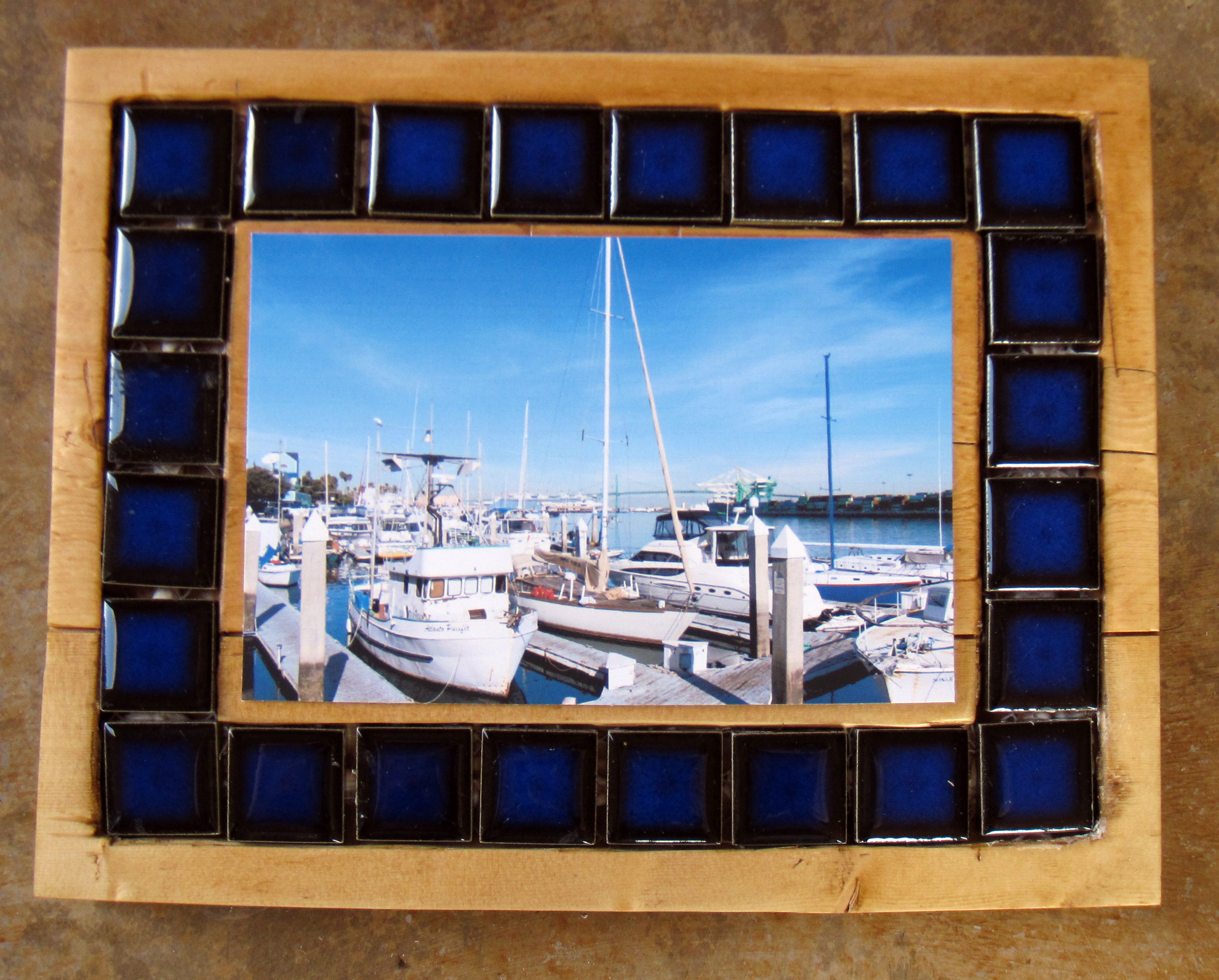
It was a lot of work, and the results aren’t perfect, but like most things, I’ll probably get better as I do more of this.
This weekend we finally had some warm afternoons and took the opportunity to work in the garden.
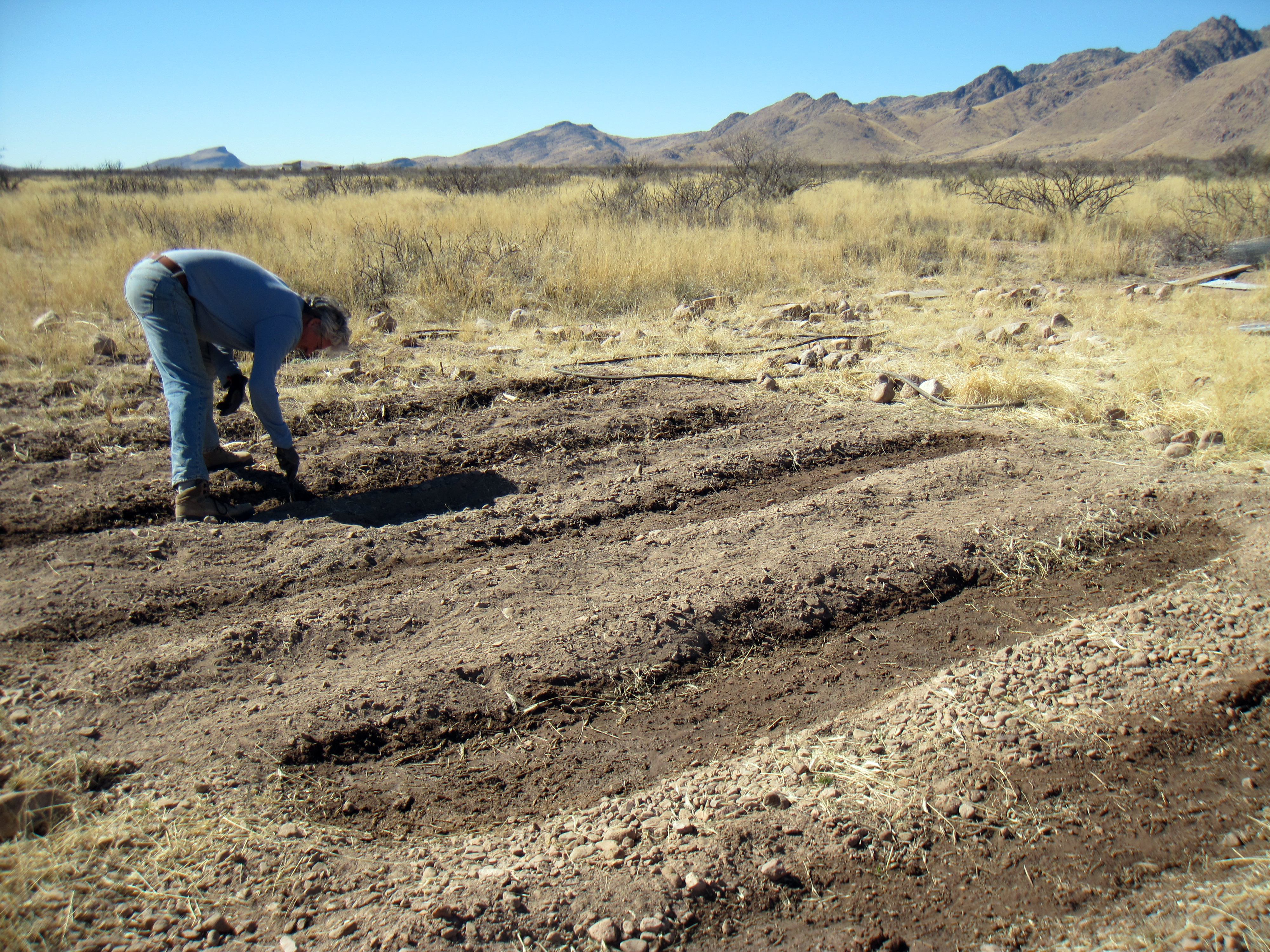
Here is Brad working on the asparagus beds. With a little luck, we’ll be eating fresh asparagus in a few weeks.
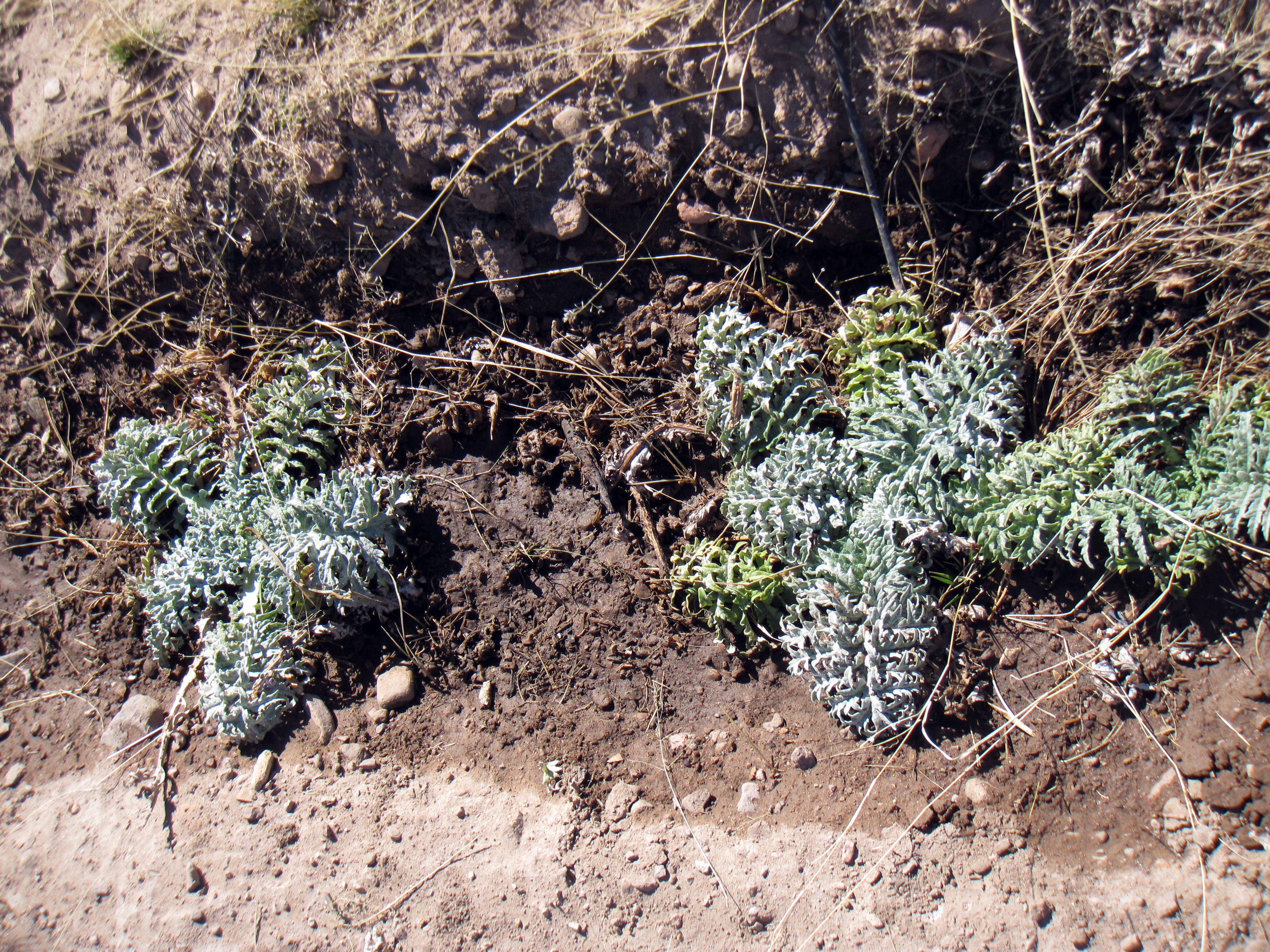
My artichokes seem to have come through the winter nicely. We love perennials!
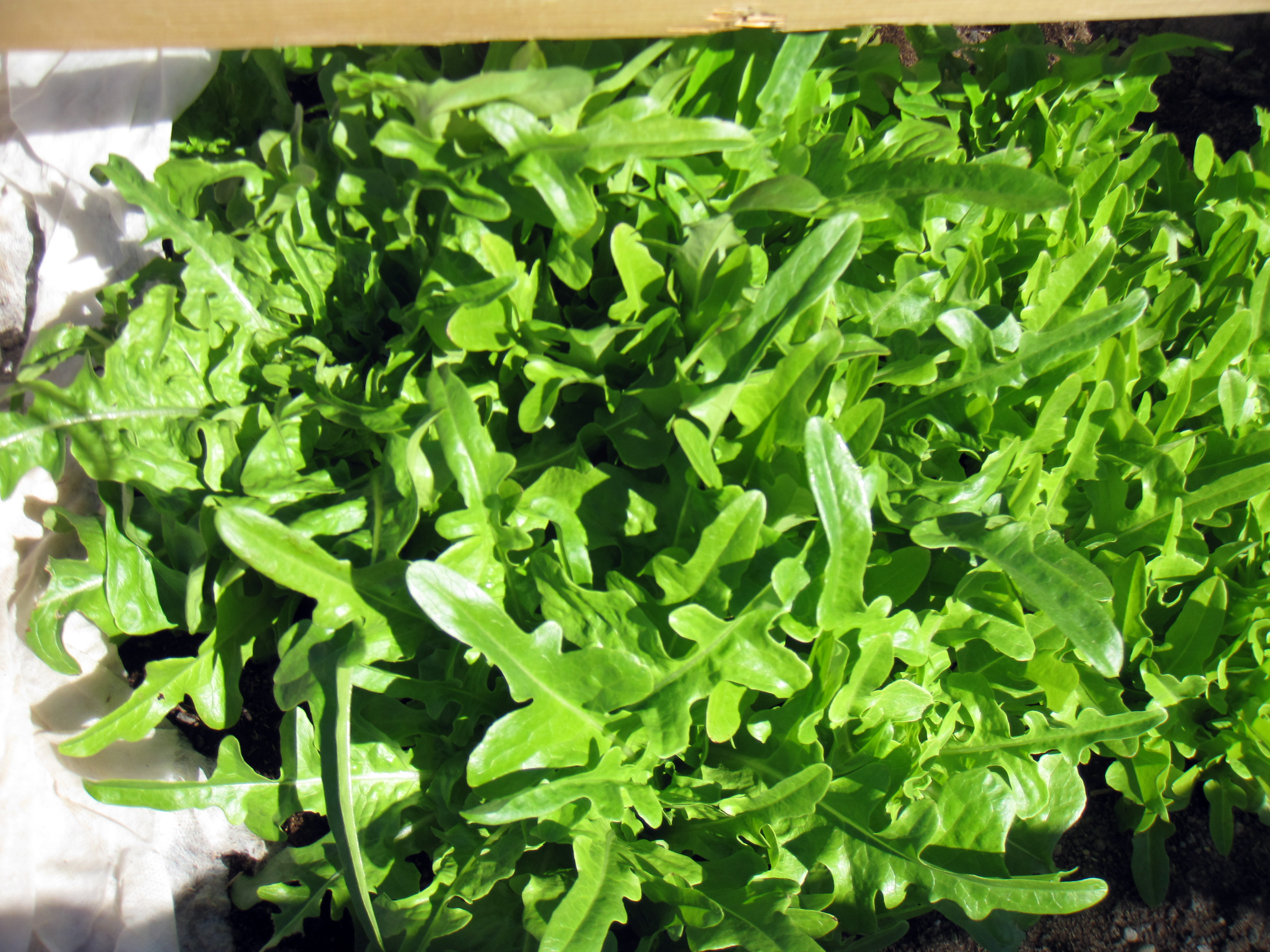
And we’ve been enjoying lettuce from the cold frame even with nighttime temperatures in the low 20s.
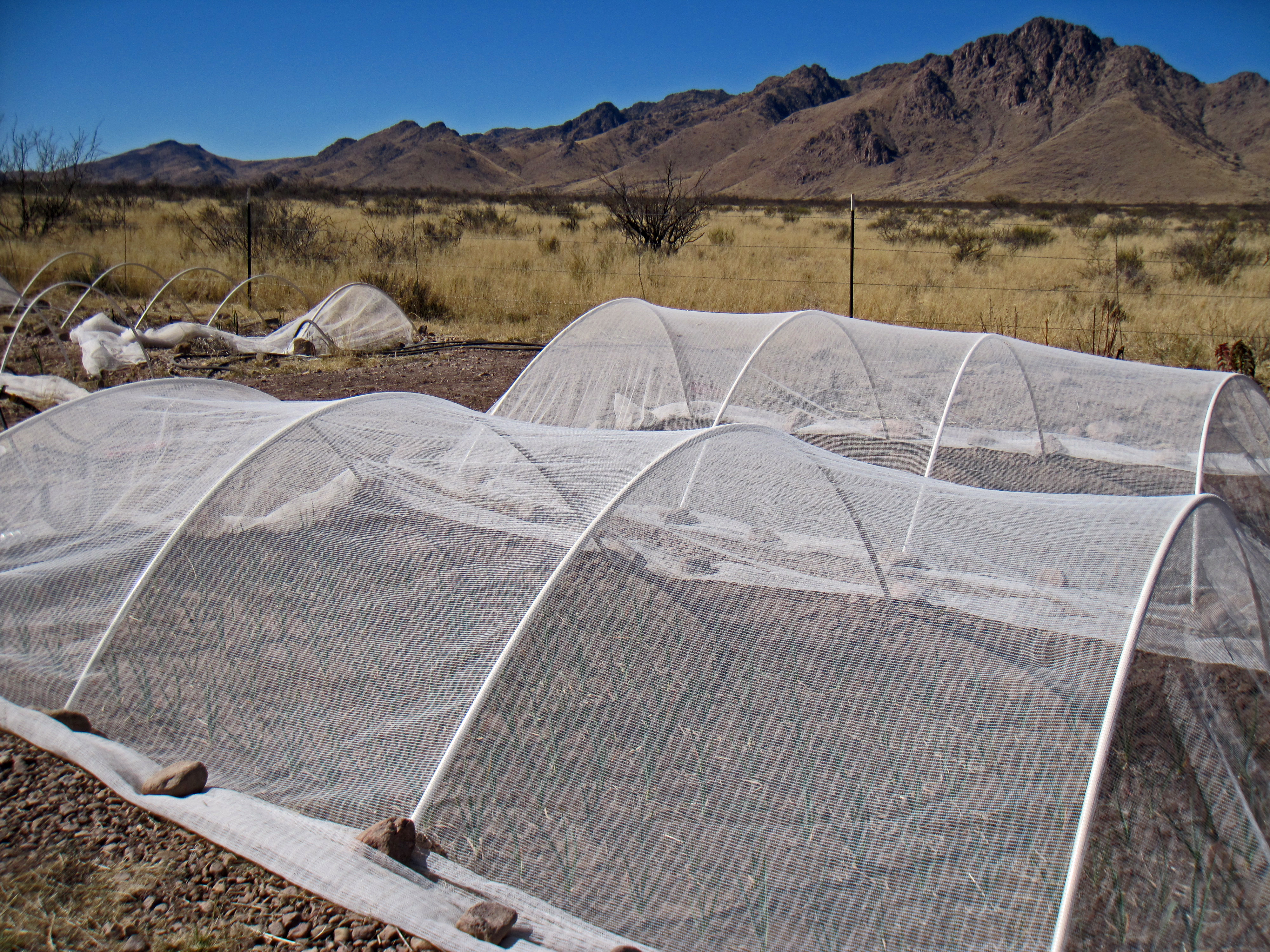
As usual, we put in two beds of garlic last fall. Until they’re ready, we’re still enjoying last year’s garlic.
And in the house, I have 30 or so tomato starts going. I’m also starting leeks inside this year. They are another crop that should last through the winter next year.
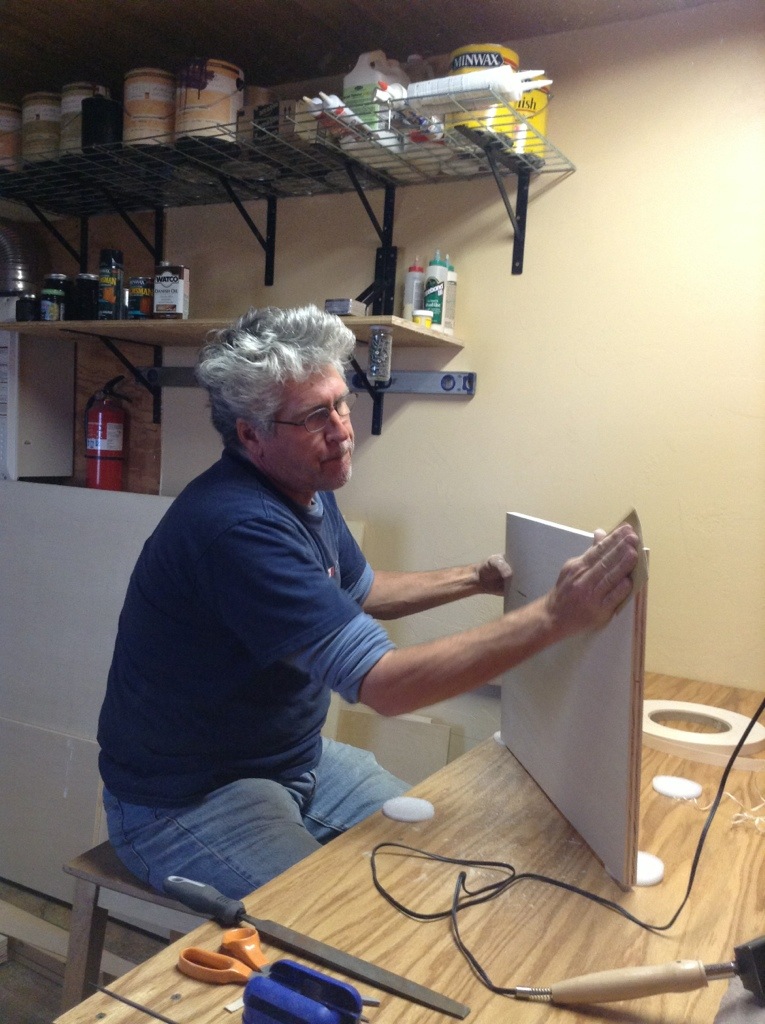
This is the old spare bedroom/laundry room/storage room in Tumbleweed. We’re working on finishing a lot of cabinet doors here now.
A friend of mind recently asked what green features we’d incorporated into the house, and I thought that would make a good post here.
While we elected early on not to pursue LEED certification for our house (which I’m very glad of…it would have taken a lot longer and been more of a hassle than it was worth), we did try to do things in a way that is sustainable.
One of the first things had to do with the slab that was already on the property when we bought it. It was not the size or layout that fit the kind of house we wanted to build, but we hated the thought of jackhammering it up and hauling all the concrete to the landfill. Our solution, ultimately, was to use the existing slab and to build two separate structures. In the long run, I’m glad we did this as we now have a lovely separate office and guest house.
Of course, the most obvious is that we are living off the grid. All of our power comes from solar with the exception of propane which is used to run the stove, hot water heater, the dryer, and the fireplace. Our hot water heater is one of the instant kinds which only heats water when you need it, rather than keeping water hot all the time. I mostly dry clothes on a line outside, so the dryer isn’t used much. We use the fireplace occasionally, but more for ambiance than for heat. (Also, it is code that you have to have a heat source.)
A consequence of running on solar is that we are careful about the power consumption of our appliances and lights. We always check this when we buy new like fans or other electronics. We have mostly CFL and LED light bulbs. (No halogens!) I am looking forward to having a bigger kitchen that will let me cook more on electric (e.g. a crock pot, microwave, toaster oven) and less on propane. On the rare occasion when we multiple days with no sun, we watch our electric consumption more carefully. (We do have a propane generator, but we don’t need to use it much, because our solar setup is quite robust.)
The biggest “green” feature of our house by far is the insulation. In both houses, we have thick super-insulated walls. (In Virga, we insulated with Icynene, a spray-in insulation made from caster beans.) This keeps the house relatively warm during winter and relatively cool in the summer, even when temperatures reach extremes of below zero or over 110, as they sometimes do. Before we lived here, I really had no idea how much difference insulation could make. Now, I think it may be more of a solution to our fossil fuel dependence than even renewable energy.
We have a bright white roof, which deflects a fair amount of sunlight, keeping the house cooler. (Strangely, we actually got a small energy tax credit for this on the first house.) We also have good double-paned windows that I love.
We do some other things to moderate the temperature. (We have no air conditioning despite living in the desert.) In the summer, we pull down shades on the western-facing windows. During the heat of the days, we keep the windows closed, and in the evenings, when it cools down, which it almost always does, we open then. We also have several ceiling fans.
In the new house, we have a couple big adobe walls, which were designed to provide passive solar and keep the house warm at night. It’s hard to judge yet how effective that will be.
One thing I’d hoped to be “green” about was our choice of building materials. We were able to use some materials that are more sustainable and less toxic. Our floors are stained and sealed with soy based products that we really love. We also used environmentally friendly paints from Yolo. These were more expensive, but worth it, we think. When feasible, we used some locally sourced wood for some of the decorative pieces like our doors.
Other materials, like OSB, dry wall, and stucco, were too difficult and/or expensive to find green alternatives for.
Beyond building, I’ve found that now that we live so much closer to the land, we think a lot more about living in a more sustainable way. In this way, it is much like living in Africa. When you have to dispose of your own trash, rather than having it picked up and hauled off for you, you think more about what you put in the trash. When you get your water from your own pump, you think more about what you put in the water supply. Now, we throw out a lot less and recycle a lot more. We are also vigilant about composting, which not only reduces trash, but gives us safe, organic fertilizer.
We grow a lot of our own food, which means not only better food, but also less trips to town. It’s not uncommon for us not to go anywhere in the car for days on end. (On the other hand, having a truck, which obviously consumes more gas than a small car, is a virtual necessity here.)
Once we get the house more complete, we’re going to put in a rainwater harvesting system.
All in all, I’m happy about what we’ve done. We’re lucky to live in a time when all this is pretty feasible, and I think that things will only get better over time.
It’s been fun finding some things that have been in storage for 5 years. Some of the stuff, I barely remember. Other things, I have been pining for.
Last week, we entered a waffle adventure.

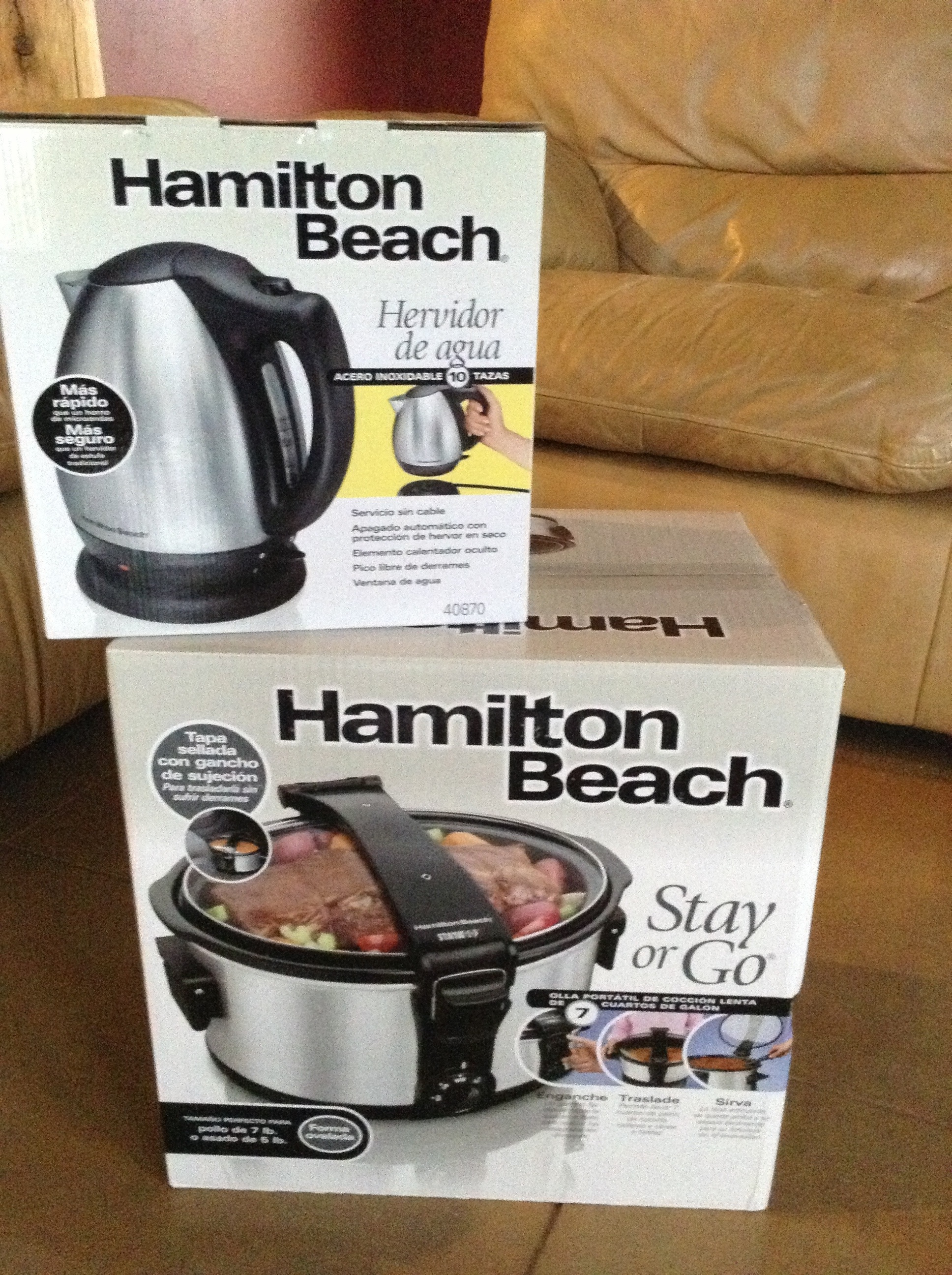
Look at these goodies Brad got me for the new kitchen!
Great for solar and just in time for our annual charity soup event.
Since we’ve moved into the new house, I’ve been noticing that the refrigerator hasn’t been very cold inside. In fact, it’s been getting a bit warm. I ignored it for several days, hoping that I was mistaken or that it would fix itself. Not too good for food safety, I know, but the alternative was too daunting to contemplate.
You see, major appliance repair here is a real challenge. When we moved here, I was worried about things like reliable electricity, Internet, and overnight package delivery, none of which have been a problem. But when a major appliance goes out, then you have a problem. (We had a similar scare a few weeks ago when the washer did nothing but make loud, scarey vibrating noises when it was turned on.)
The alternatives are to try to fix it yourself (usually not very feasible, especially with newer appliances), load the thing into the back of the truck and head for Tucson (usually at least twice), or pay a large sum for someone from near Tucson to come here (again at least twice). Ugh.
So yesterday, having taken the temperature of the refrigerator and realizing that it really wasn’t cooling, we loaded all of the food into coolers and contemplated what to do next. Brad read about a way to reset things, which we tried. No luck. He then suggested emptying the freezer (which was working fine) and turning the whole thing off overnight. Ok. It’s below freezing here at night, so we put the freezer food into coolers and put it all on the porch. (Good thing we have lots of coolers. They’re a necessity here even for grocery runs.)
Miraculously, now, the fridge seems to be working again. Thank you to the appliance gods. And yes, we threw out the mayonnaise.